
Hairy violet
Viola hirta L.
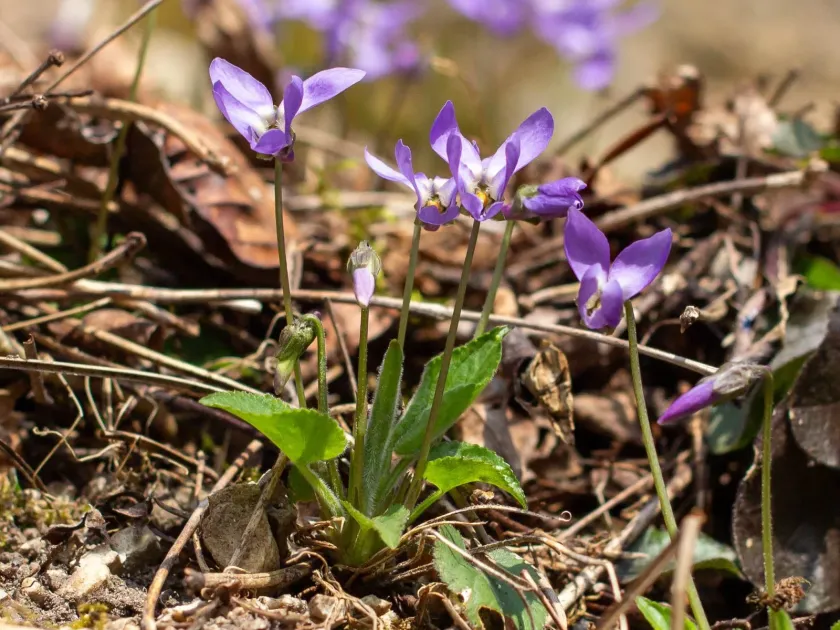
Description
Sowing dates
The hairy violet, scientifically known as Viola hirta, is propagated through seeds or division of mature rhizomes. Seeds should be sown in late summer or autumn to facilitate the natural stratification process necessary for successful germination in the spring.
For indoor propagation, seeds are sown in trays during early spring under controlled light and temperature conditions (18-20°C). Once seedlings reach a height of a few centimeters, they can be transplanted to a prepared nursery bed.
Vegetative division is the most reliable method for larger scale establishment. Mature clumps should be lifted in early spring, carefully divided into smaller sections with healthy roots, and immediately replanted to avoid desiccation.
Proper spacing is crucial for the healthy development of this perennial. A distance of 20 to 25 centimeters between individual plants ensures sufficient airflow, which minimizes the risk of fungal diseases throughout the growing season.
Initial watering immediately after planting is essential to settle the soil around the roots. Subsequent moisture levels should be managed to keep the soil consistently damp but never waterlogged to ensure robust root system establishment.
Growing requirements
The hairy violet belongs to the Violaceae family and is recognized for its short hairs on the foliage. Native to European and Asian woodlands, it thrives in environments that mimic forest floor conditions with dappled sunlight and fertile organic soil.
The ideal growing environment for this species is a site with partial shade, as it is sensitive to direct, high-intensity sunlight. It performs best when sheltered from drying winds, which helps maintain the humidity level required for healthy growth.
The soil should be well-drained, rich in humus, and neutral to slightly acidic in terms of pH level. Heavily compacted soils or those prone to standing water are detrimental to the root health of the species and should be avoided or amended with organic matter.
As a hardy perennial, Viola hirta is well-adapted to cooler climates and can withstand winter dormancy without additional protection. During the growing season, consistent moisture is more critical than excessive nutritional input.
Annual maintenance involves light weeding around the base of the plants to reduce competition for nutrients. An application of compost in the early spring acts as a gentle fertilizer, promoting healthy foliage production and longevity.
Main diseases and pests
Leaf spot diseases represent the primary pathological threat to this crop, particularly in periods of high humidity. Early identification and removal of infected leaves are vital to maintaining the health and vigor of the planting.
Pests such as spider mites and various leaf-eating caterpillars can impact the plant's growth. Regular monitoring is encouraged, especially during dry spells, to prevent infestations that could potentially weaken the established perennial populations.
Powdery mildew is another common issue during damp, cool weather, appearing as a white, dusty layer on the leaves. Cultural practices such as thinning the canopy and improving ventilation are effective in reducing the prevalence of this disease.
Slugs and snails can cause significant damage to young shoots and leaves. Physical barriers, such as copper tape or wood ash, can be effectively utilized around the base of the plants to deter these mollusks and prevent foliage loss.
Integrated pest management strategies focusing on hygiene and early detection are recommended. Keeping the planting site clean of decaying debris minimizes the habitat available for pests and pathogens to survive between seasons.