
Grevillea thyrsoides pustulata
Grevillea thyrsoides Meisn. subsp. pustulata Olde & Marriott
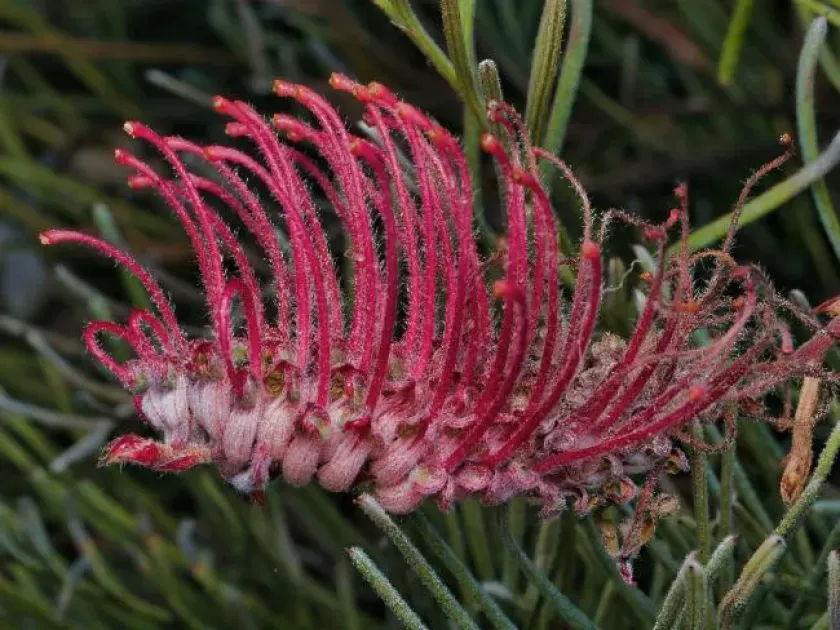
Description
Growing requirements
Grevillea thyrsoides subsp. pustulata is a member of the Proteaceae family, native to the Western Australian region. This evergreen shrub is highly valued for its unique botanical structure and specialized adaptation to harsh, arid environmental conditions.
The primary requirement for successful cultivation is exceptional soil drainage. In its native habitat, the plant grows in sandy, nutrient-poor soils; therefore, in agricultural or nursery settings, it is essential to mimic these conditions to prevent root rot.
This species requires full sun exposure to thrive. Its foliage and inflorescences are adapted to high solar radiation, making it an excellent candidate for xeriscaping or specialized ornamental gardens in Mediterranean-type climates.
Temperature management is crucial as this plant is not frost-hardy. It thrives in well-ventilated conditions where the air humidity remains relatively low, which prevents the development of typical airborne fungal diseases often associated with indoor or greenhouse cultivation.
Management of soil fertility must be handled with extreme care. Due to the presence of proteoid roots, which are highly efficient at nutrient uptake, the plant is sensitive to high phosphorus levels. Low-phosphorus fertilization strategies are recommended to maintain plant health.