
Grevillea thelemanniana
Grevillea thelemanniana Hügel ex Endl.
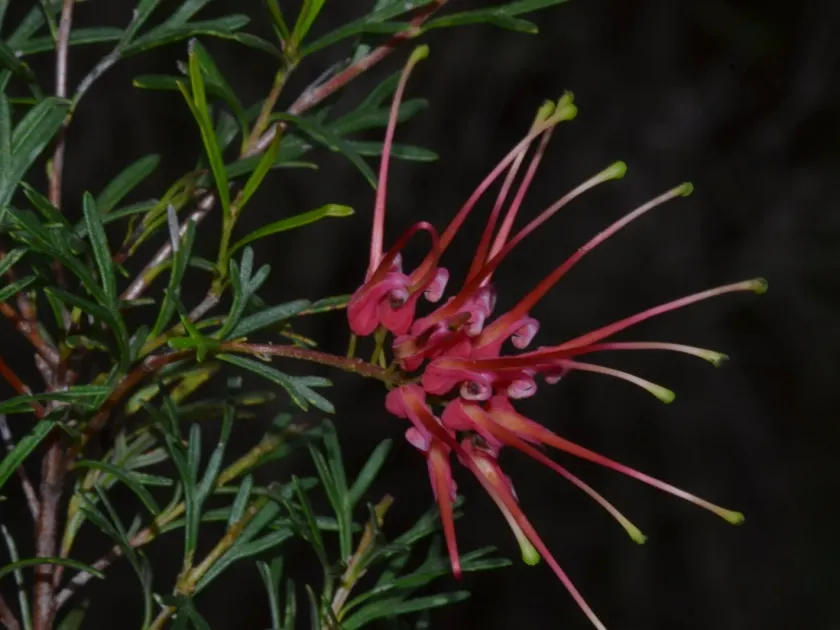
Description
Growing requirements
Grevillea thelemanniana is a hardy evergreen shrub belonging to the Proteaceae family, native to the diverse landscapes of Western Australia. It is highly valued in horticulture for its fine, fern-like foliage and clusters of unique, comb-shaped pink to red flowers.
This species thrives in full sun exposure, which is critical for its development and flower production. It requires a well-draining soil profile, typically sandy or gravelly in texture, as it is adapted to nutrient-poor environments where water does not linger near the root zone.
Regarding climate, the plant prefers Mediterranean-type conditions with dry summers and mild winters. It lacks frost tolerance, making it unsuitable for regions with extreme cold unless it is grown in containers that can be moved indoors during the winter months.
Botanically, the plant is characterized by its adaptability to arid conditions. Its leaf morphology helps minimize transpiration, and the nectar-rich flowers play a vital role in local ecosystems by providing a food source for nectar-feeding birds and insects.
In landscaping, it serves as an excellent specimen plant or a ground cover shrub. Its compact growth habit and long flowering season make it a preferred choice for xeriscaping projects and native plant gardens where water conservation is prioritized.
Main diseases and pests
The primary concern for Grevillea thelemanniana cultivation is root rot, typically caused by Phytophthora species. Ensuring proper soil aeration and avoiding over-irrigation are the most effective preventive measures.
Pests such as spider mites and mealybugs can pose a threat, particularly in enclosed spaces or during periods of prolonged drought. Monitoring the underside of the foliage is essential for early detection.
Leaf spot diseases may occur in humid conditions with poor airflow. Maintaining adequate space between plants is a key cultural practice to keep the foliage dry and reduce the risk of fungal infections.
Sensitive root systems require specific care when using fertilizers. Phosphorus-containing products should be strictly avoided, as high levels of this element can be toxic to many members of the Proteaceae family.
Systematic pruning after the flowering phase not only encourages a denser growth habit but also helps remove any damaged or infected stems, maintaining the overall vitality of the plant.