
Grevillea stenomera
Grevillea stenomera
Description
Growing requirements
Grevillea stenomera is an evergreen shrub belonging to the Proteaceae family, native to Western Australia. It is well-adapted to harsh environmental conditions, specifically arid sandy landscapes where moisture availability is limited.
The plant thrives in well-draining, nutrient-poor, and slightly acidic soils. One of the most critical agricultural requirements is ensuring excellent drainage, as the roots are highly susceptible to phytophthora root rot when kept in waterlogged conditions.
It requires full sun exposure to maintain its compact growth habit and produce prolific flowers. In regions with freezing winters, it must be grown in containers and moved indoors, as it does not tolerate sustained frost.
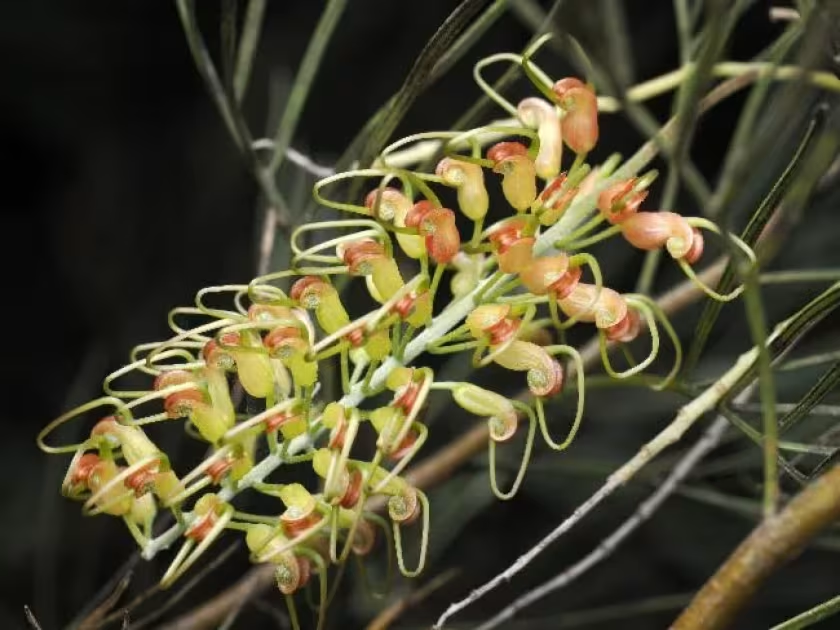
Botanically, it is known for its finely divided, feathery foliage and unique, brush-like flowers that attract birds and pollinators. These features make it a visually striking specimen in any xeriscape garden.
Maintenance involves minimal irrigation once the plant is established. It has evolved to survive in low-fertility environments, so excessive fertilization, particularly with phosphorus, should be avoided as it can be toxic to the plant.
Harvesting
The primary use of Grevillea stenomera is ornamental, particularly in landscaping Mediterranean or arid-style gardens. It is highly valued for its texture and the longevity of its inflorescences.
In addition to ornamental use, it serves as a valuable plant for erosion control on sandy slopes, where its root system helps stabilize the soil structure effectively under dry conditions.
Pruning is essential to maintain the plant's shape and density. Light pruning after the flowering season encourages new growth and helps remove spent inflorescences, which keeps the shrub looking vibrant and healthy.
Seed harvesting should be performed with caution. The woody follicles should be collected once they turn brown and dry, but before they open naturally to disperse their seeds on the ground.
As a sustainable landscaping choice, Grevillea stenomera is increasingly used in water-wise gardening projects. By requiring very little input, it helps reduce the overall maintenance footprint of large garden estates.