
Silky grevillea
Grevillea sericea (Sm.) R. Br.
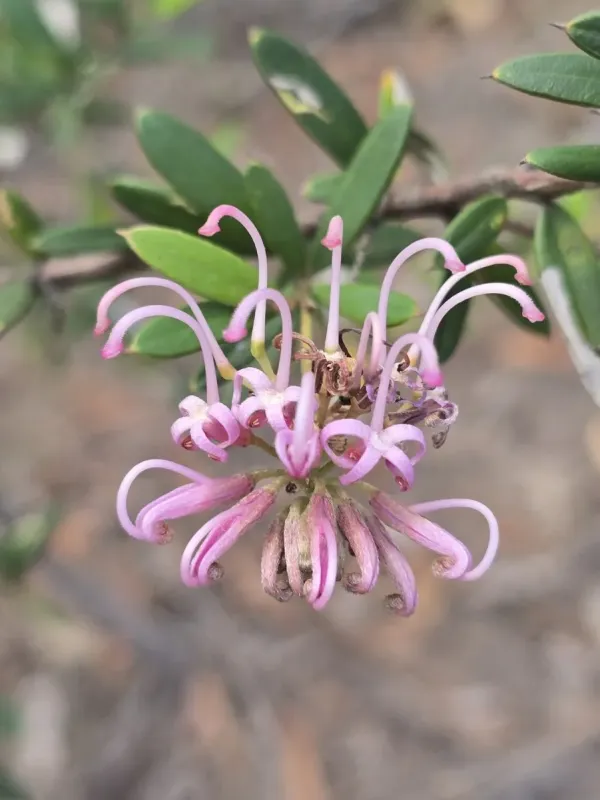
Description
Growing requirements
The Silky grevillea (Grevillea sericea) is an evergreen shrub classified within the Proteaceae family. Native to the eastern regions of Australia, this species is naturally adapted to sandy, well-drained soils that are typically low in nutrients.
The plant is distinguished by its narrow leaves covered in fine, silky hairs, which provide an elegant texture. The flowers are generally pink to mauve, arranged in clusters that act as a magnet for native birds and insect pollinators.
Cultivation requires strict adherence to soil phosphorus levels. Since this species has evolved in nutrient-poor soils, common high-phosphorus fertilizers can be toxic, requiring specialized low-phosphorus or native-plant-specific plant foods.
Regarding climate, the plant thrives in warm, temperate conditions. While it can tolerate light frost once established, it is best grown in protected environments or milder zones to ensure consistent health and flower production.
Its primary agricultural and horticultural value lies in ornamental landscaping. It is highly prized as a specimen plant or as part of a mixed-shrub border in botanical collections that feature native Australian flora.
Main diseases and pests
The most significant threat to the Silky grevillea is root rot, typically caused by pathogens like Phytophthora. Prevention relies heavily on providing excellent soil aeration and avoiding waterlogged conditions.
Pest issues often involve scale insects and spider mites, which can be particularly troublesome in glasshouse settings or during periods of prolonged drought. Monitoring the underside of leaves is essential for early detection.
Nutritional stress is a frequent issue, manifesting as interveinal chlorosis. This is usually linked to iron deficiency or the inability of the roots to uptake nutrients due to poor soil pH balance, which should ideally be slightly acidic.
To reduce disease pressure, it is recommended to maintain optimal spacing between plants to ensure good airflow. Air circulation helps keep the foliage dry and limits the establishment of fungal spores.
Effective management includes the removal of dead or damaged branches through pruning after the flowering season. This practice not only improves the structural integrity of the shrub but also minimizes areas where pests could potentially congregate.