
Grevillea rosmarinifolia x grevillea lanigera
Grevillea rosmarinifolia x grevillea lanigera
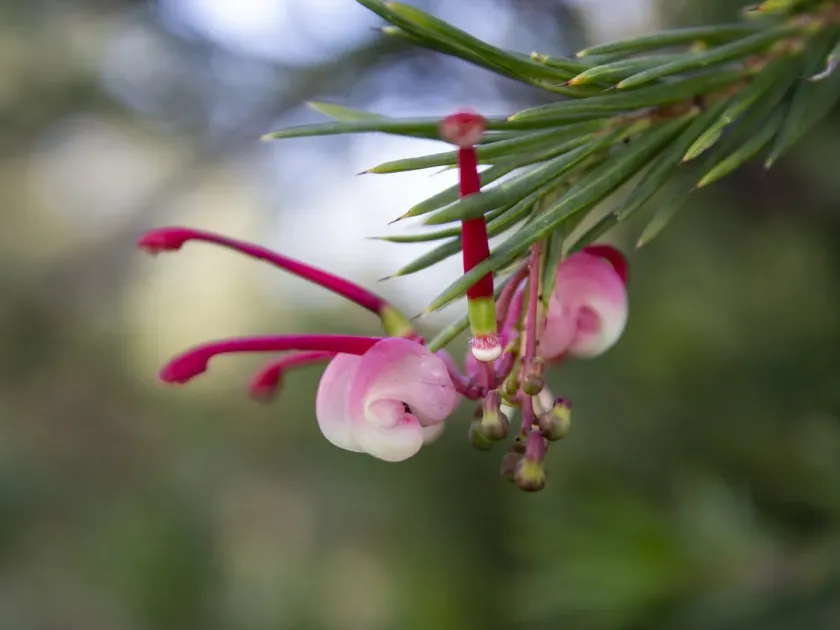
Description
Growing requirements
Grevillea rosmarinifolia x lanigera is an evergreen ornamental shrub representing a hybrid between two well-known Australian species within the Proteaceae family. Originating from Australia, this cultivar is highly valued in horticulture for its unique foliage and distinct, bird-attracting floral displays that persist over long periods.
The cultural requirements for this plant focus heavily on soil structure and drainage. It thrives in well-draining, slightly acidic to neutral soils where water cannot accumulate near the root zone. Ensuring sufficient soil aeration is essential for preventing root rot and maintaining the overall health of the specimen in garden environments.
Botanically, this hybrid displays the needle-like, rosemary-esque leaves characteristic of one parent, combined with the woolly (lanigera) leaf texture of the other. This foliage adaptation allows the plant to manage water loss efficiently under high sunlight conditions, which is crucial for its survival in native, arid-to-temperate climates.
Management of the shrub involves minimal intervention regarding fertilization, with a strict prohibition against phosphorus-containing products. Phosphorus is toxic to many species within the Proteaceae family, as they have evolved to extract nutrients from low-fertility soils; thus, only specialized, low-phosphorus fertilizers should be employed.
In landscaping, this grevillea is primarily used as an ornamental focal point, a hedge component, or a decorative container plant. Its ability to tolerate light trimming and shaping makes it versatile for different garden styles, while its drought tolerance once established makes it an excellent candidate for water-wise gardening schemes.
Main diseases and pests
The primary threats include root and collar rots, which are almost always a result of poor drainage or overwatering. Additionally, the plants may be susceptible to scale insects and, in poorly ventilated spaces, fungal issues such as powdery mildew, necessitating regular monitoring and integrated pest management practices.