
Silky oak
Grevillea robusta A. Cunn. ex R. Br.
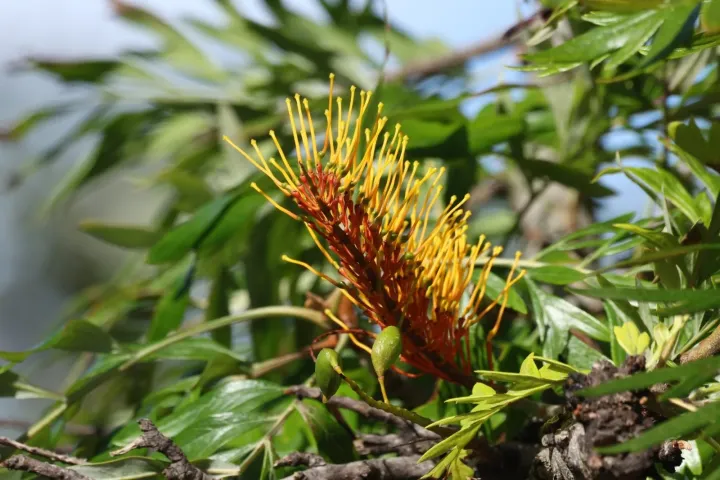
Description
Growing requirements
Grevillea robusta, commonly known as the silky oak, is a fast-growing evergreen tree belonging to the Proteaceae family. Native to eastern Australia, it is prized for its fern-like foliage and vibrant, golden-orange flowers that appear in spring.
This species thrives in full sun and requires well-draining soil to prevent root rot. It is adaptable to various soil types, including sandy loams, provided they are slightly acidic to neutral in pH and remain adequately aerated throughout the growing season.
In terms of climate, Grevillea robusta prefers warm, frost-free environments but can tolerate light frosts once established. In colder regions, it is frequently utilized as a container-grown plant for greenhouses or bright indoor areas.
Cultural practices involve moderate watering, especially during the first few years after planting. It is critical to use specialized fertilizers formulated for Proteaceae, as the plant is highly sensitive to phosphorus, which can cause severe leaf damage if applied in excessive amounts.
Beyond its ornamental value in landscaping and street plantings, Grevillea robusta is valued for its timber. The wood, known as Australian silky oak, features a distinctive grain pattern that makes it a popular choice for high-quality furniture, cabinetry, and decorative woodwork.
Main diseases and pests
Root rot, primarily caused by Phytophthora species, is the most serious threat to Grevillea robusta, often occurring in poorly drained or waterlogged soils.
Scale insects and mealybugs are the most common pests, which attach themselves to the stems and leaves to feed on plant sap, leading to stunted growth.
Spider mites may pose a challenge during hot and dry spells, particularly if the plant is grown in containers where humidity control is more difficult to maintain.
Integrated pest management strategies, including the use of horticultural oils and systemic insecticides, are recommended to maintain tree health.
Monitoring the soil moisture levels and ensuring proper site selection are the best preventative measures against most diseases associated with this cultivation.