
Grevillea rhyolitica
Grevillea rhyolitica Makinson
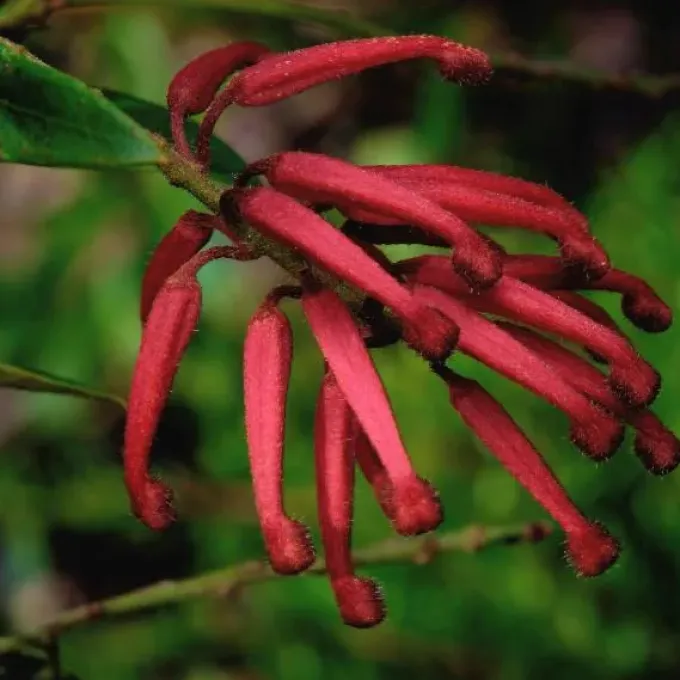
Description
Growing requirements
Grevillea rhyolitica is a striking evergreen shrub belonging to the Proteaceae family. Native to a restricted range in southeastern Australia, this plant is well-adapted to rocky environments, specifically growing on rhyolite outcrops, which defines its preference for high-drainage substrates.
The plant thrives in full sun but benefits from light afternoon shade in hotter climates to protect its foliage. It is highly adapted to nutrient-poor soils, and it is crucial to avoid phosphorus-rich fertilizers, as the roots are sensitive and can easily be damaged by high concentrations of this nutrient.
Climate requirements for this species are centered around temperate conditions. While it possesses some frost tolerance, consistent exposure to freezing temperatures can cause significant tissue damage. It is best suited for climates with mild, frost-free winters and low atmospheric humidity.
Agrotechnical management focuses heavily on irrigation control. Providing water only when necessary and ensuring that the soil structure remains loose and aerated are the foundations of successful cultivation. In clay soils, raised beds are highly recommended to prevent waterlogging.
This species is primarily utilized for ornamental purposes in xeriscaping and sustainable landscaping. Its unique, nectar-rich flowers are visually appealing and serve as a vital resource for native pollinators, making it an excellent choice for biodiversity-conscious gardens.
Main diseases and pests
The primary threats to Grevillea rhyolitica involve root rot pathogens, particularly those triggered by waterlogged soil conditions. Phytophthora species are the most dangerous threats to this shrub, often leading to rapid decline if drainage is inadequate.
Pest management is often required for scale insects and mealybugs, which can cluster on new growth. These pests weaken the plant by extracting sap, so manual removal or the application of appropriate systemic insecticides is recommended upon the first sign of infestation.
Spider mites can become a significant issue, especially during hot, dry spells or in greenhouse conditions. Increasing ambient humidity and ensuring good air circulation around the canopy helps to deter these pests and maintain foliage health.
Nutrient imbalances, particularly iron deficiency, can lead to chlorosis. This is rarely due to a lack of iron in the soil but rather the inability of the plant to absorb it due to improper soil pH levels, which should ideally be maintained in a slightly acidic range.
Proactive maintenance, including the removal of dead or diseased branches, is essential to minimize the spread of fungal infections. Ensuring the plant is not overcrowded with other vegetation will also improve airflow and decrease the likelihood of disease outbreaks.