
Grevillea
Grevillea pteridifolia x Grevillea banksii
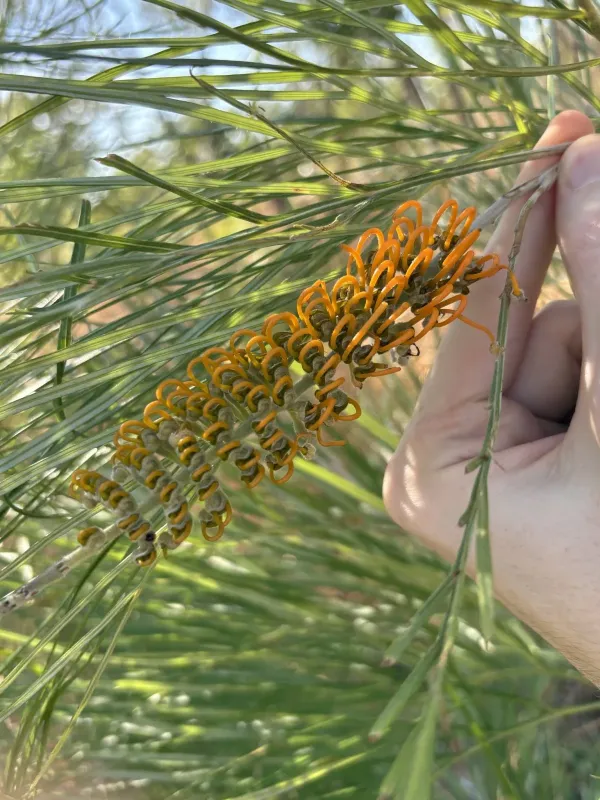
Description
Growing requirements
Hybrid Grevillea (Grevillea pteridifolia x G. banksii) is a stunning member of the Proteaceae family, widely recognized for its vibrant, brush-like inflorescences. This hybrid combines the hardiness of its parents with a highly aesthetic appearance, making it a valuable ornamental crop.
Originating from the subtropical regions of Australia, this plant thrives in environments that mimic its natural habitat. It requires full sun exposure to flourish, as shade leads to poor flowering and leggy, weak plant structure.
The soil profile must be sandy or loamy with excellent drainage capacity. Being a Proteaceae member, it has evolved in phosphorus-poor soils, making it highly sensitive to commercial fertilizers; specialized low-phosphorus feeds are mandatory for healthy growth.
Climate requirements include protection from frost, as the hybrid is not frost-tolerant. It performs best in Mediterranean or tropical climates where temperatures remain stable and the air is relatively dry, which helps prevent the development of foliar pathogens.
Water management is the most critical aspect of agrotechnology for this species. While it is drought-tolerant once established, container-grown plants require consistent moisture without the risk of waterlogging, which is quickly fatal to the root system.
Main diseases and pests
Root rot is the most devastating disease affecting Grevillea, typically caused by waterlogged soil conditions. Once pathogens like Phytophthora colonize the root zone, the plant declines rapidly, making prevention through drainage the only viable strategy.
Mealybugs are common pests that hide in the leaf axils and stems, secreting honey-dew that attracts sooty mold. Regular scouting and manual removal, followed by horticultural soap applications, are recommended for organic management.
Spider mites frequently target the plant in arid, indoor conditions, causing fine stippling and webbing on the underside of leaves. Maintaining optimal humidity and periodic misting are effective preventative measures against mite outbreaks.
Fungal leaf spot can occur during prolonged periods of wet weather or poor air circulation. To manage this, pruning should focus on opening up the center of the plant to encourage airflow and reduce the humidity trapped within the foliage.
Nutritional imbalances, particularly chlorosis, are common when using high-pH water or alkaline soil. Regular soil testing and the adjustment of water pH are necessary to ensure the plant can efficiently uptake iron and other essential micronutrients.