
Fern-leaved grevillea
Grevillea pteridifolia Knight
Description
Growing requirements
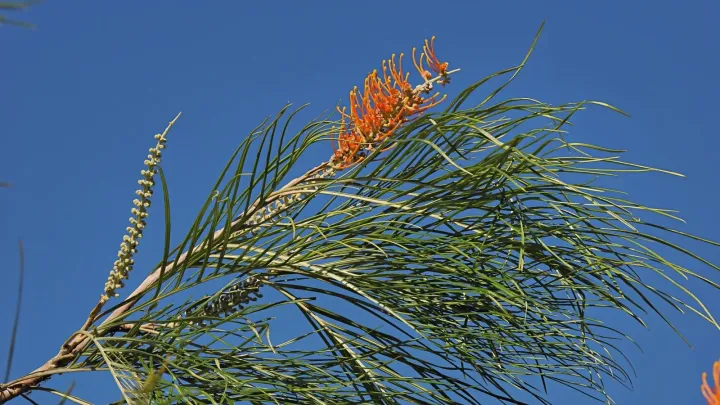
Fern-leaved grevillea (Grevillea pteridifolia) is a striking evergreen tree species belonging to the Proteaceae family. Native to the tropical regions of Northern Australia, it is well-adapted to savanna environments and woodland areas.
The plant is defined by its highly divided, fern-like foliage and large, showy orange-yellow toothbrush-shaped flower spikes. These blooms are highly sought after in ecological landscaping for their role in attracting nectar-feeding birds.
In terms of agricultural requirements, the species demands full sun exposure and sandy, well-draining soil. It is notably drought-tolerant once established but struggles significantly in heavy or waterlogged soil conditions.
Climate management is crucial for this plant; it is a tropical species that does not tolerate frost. In non-tropical regions, it must be grown in containers and moved indoors or into a greenhouse during the cooler months of the year.
Economically, it is valued primarily as a horticultural specimen for gardens and urban parks. It serves as an excellent ornamental plant that provides both visual aesthetic value and ecological benefits to its local habitat.
Main diseases and pests
The primary threats to Grevillea pteridifolia are fungal infections, such as root rot, which are triggered by overwatering or poor soil drainage, leading to rapid decline in plant health.
Pests that frequently infest this culture include mealybugs, aphids, and scale insects, which target the soft growth and flower stems, sapping the plant of vital nutrients and vigor.
Phytophthora root rot is particularly concerning for this genus, as plants in the Proteaceae family are notoriously sensitive to these soil-borne pathogens when environmental conditions are suboptimal.
Effective management strategies involve monitoring the soil moisture levels, ensuring proper air circulation around the foliage, and applying targeted pest control when initial signs of infestation appear.
Maintenance should prioritize the use of specialized, low-phosphorus fertilizers, as these plants have developed evolutionary adaptations to thrive in low-nutrient soils and can be harmed by standard high-phosphorus fertilizers.