
Lavender grevillea
Grevillea lavandulacea Schltdl.
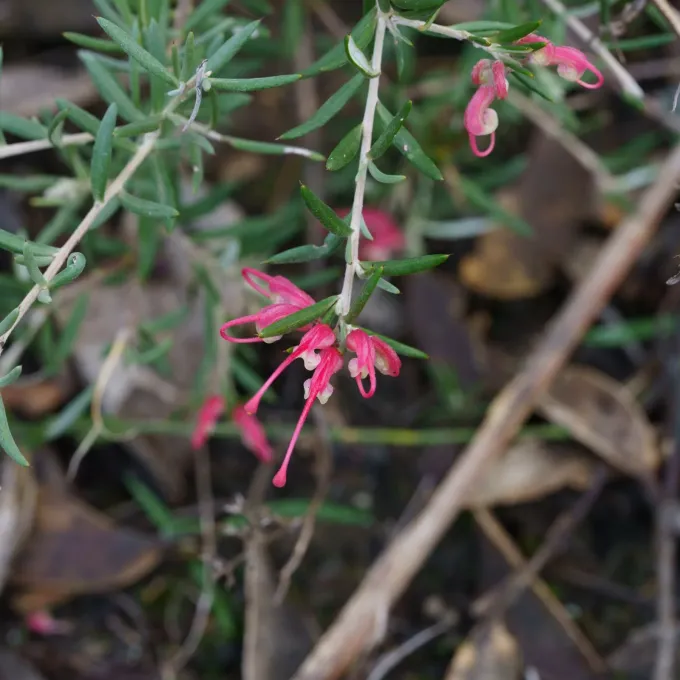
Description
Growing requirements
Lavender grevillea (Grevillea lavandulacea) is an evergreen shrub belonging to the Proteaceae family. It originates from South Australia and Victoria, thriving in a variety of bushland environments ranging from open woodlands to rocky outcrops.
The plant is recognized by its small, narrow leaves often covered in fine greyish hairs, which provides a silvery appearance. It typically grows as a dense, spreading shrub reaching heights between 0.5 and 2 meters depending on the specific cultivar.
Optimal growth conditions require well-draining, slightly acidic to neutral soils. It is essential to avoid heavy clay soils that retain moisture, as the plant is highly susceptible to root decay when subjected to waterlogged environments.
Regarding climate, this species prefers full sun exposure. It is well-adapted to Mediterranean climates with dry summers, displaying significant drought tolerance once it has established a deep root system in its permanent location.
In landscaping, it is utilized as an ornamental specimen in rock gardens or as a screening hedge. Its vibrant, bird-attracting flowers make it a favorite for sustainable garden designs that aim to support local pollinator populations.
Main diseases and pests
The most critical threat to Grevillea lavandulacea is Phytophthora root rot. This soil-borne pathogen thrives in wet soil conditions and can cause the rapid decline and death of healthy shrubs.
Pests such as mealybugs and scale insects may infest the foliage. These pests feed on plant sap and can weaken the shrub, creating entry points for secondary fungal infections.
Care must be taken when applying fertilizers, as members of the Proteaceae family are highly sensitive to high phosphorus levels, which can prove toxic to their specialized root systems.
Pruning is essential not only for shaping but also for plant health. Regular trimming helps maintain airflow through the canopy, reducing the risk of fungal leaf spots caused by trapped humidity.
Effective management requires strict adherence to irrigation schedules, ensuring the soil dries out between watering sessions to prevent the buildup of harmful moisture-loving pathogens.