
Grevillea lanigera
Grevillea lanigera A. Cunn. ex R. Br.
Description
Growing requirements
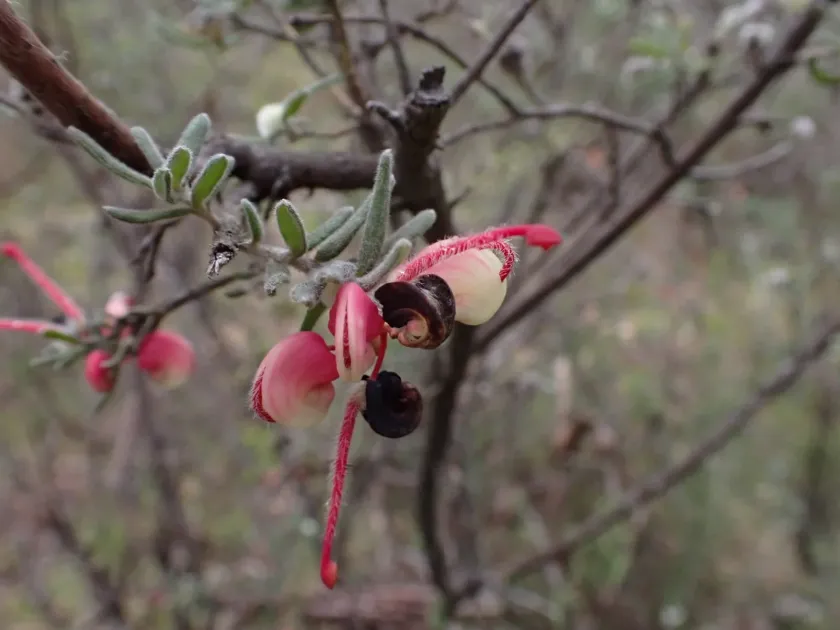
Grevillea lanigera, commonly known as the woolly grevillea, is a species of the Proteaceae family native to south-eastern Australia. This evergreen shrub is prized for its hardy nature and attractive, woolly foliage, which gives the plant its distinct appearance.
The plant thrives in Mediterranean-style climates, requiring full sun to light shade to bloom effectively. Its botanical structure includes small, leathery leaves and unique, spider-like flower clusters that range in color from cream and pink to deep red.
Agricultural requirements focus heavily on soil composition. Grevillea lanigera needs well-drained, acidic to neutral soil. Like many proteaceous plants, it has evolved to thrive in nutrient-poor conditions and is particularly sensitive to phosphorus-rich fertilizers.
Proper water management is essential for this species. While it is moderately drought-tolerant once established, it requires consistent moisture without becoming waterlogged. Containers must have multiple drainage holes to prevent root rot.
Landscaping usage is widespread in temperate regions where frost is minimal. It is frequently utilized as a groundcover or a small specimen bush in rock gardens and native plant borders, providing nectar for pollinators and seasonal color interest.
Main diseases and pests
Root rot caused by Phytophthora cinnamomi is the most significant threat to Grevillea lanigera. This fungal pathogen flourishes in damp, poorly drained soils and can devastate a plant collection if strict water management is not maintained.
Insect pests such as scale insects and spider mites are common in greenhouses or sheltered outdoor environments. These sap-sucking insects can cause yellowing of the leaves and stunted growth if left unmanaged.
Environmental stress, such as sudden changes in temperature or prolonged humidity, can weaken the plant's natural defenses, making it more susceptible to opportunistic fungal infections on the leaves and stems.
Integrated pest management is recommended over heavy chemical use. Natural predators or horticultural oils can be effective against minor infestations without damaging the plant's delicate root and foliage system.
Cultural hygiene practices, such as removing fallen leaves and providing adequate space for air circulation between individual plants, are fundamental to preventing the spread of diseases in dense garden plantings.