
Grevillea
Grevillea juniperina x grevillea victoriae
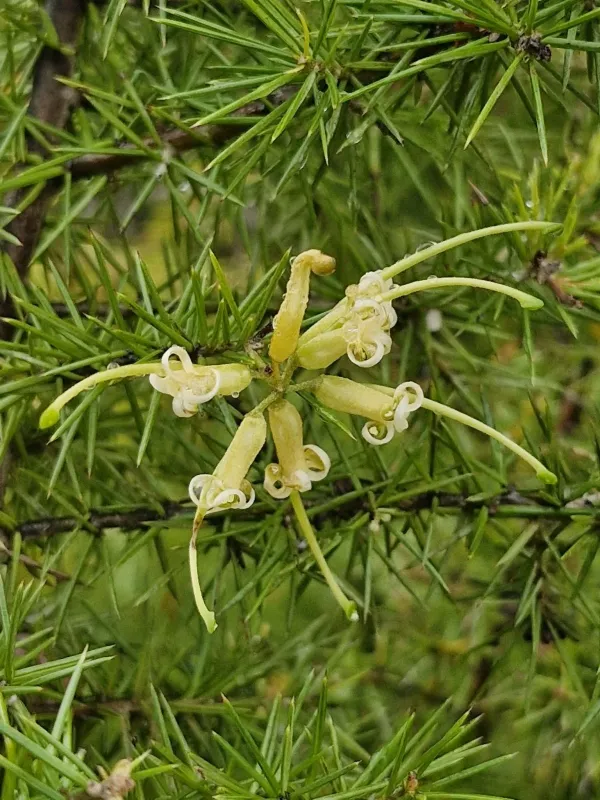
Description
Growing requirements
Grevillea (Grevillea juniperina x grevillea victoriae) is a perennial ornamental shrub belonging to the Proteaceae family. This hybrid is prized for its unique needle-like foliage and vibrant, spider-like inflorescences that attract various pollinators.
Originating from the diverse landscapes of Australia, this species is adapted to thrive in nutrient-poor and well-drained environments. Its natural habitat includes rocky slopes and scrublands, which dictates its specific requirements for cultivation in garden or container settings.
The plant requires full sun exposure to maintain its compact growth habit and produce abundant flowers. It is intolerant of heavy, clay-based soils; thus, the soil must be sandy or gravelly, with excellent drainage to prevent root rot, which is a major physiological risk.
Soil pH should be slightly acidic to neutral. High levels of phosphorus in fertilizers are detrimental to Grevillea, as the plant has evolved to survive in low-phosphorus soils; therefore, specialized fertilizers or compost should be avoided.
Watering management is crucial, especially for young specimens. Once established, the hybrid is relatively drought-tolerant, but during prolonged heatwaves, light irrigation is necessary to support plant vitality without creating waterlogged conditions.
Main diseases and pests
The most common and lethal threat to Grevillea is Phytophthora root rot. This pathogen thrives in stagnant, waterlogged soils, leading to rapid decline and death of the root system, which is often irreversible.
Scale insects are frequent pests that attach themselves to stems and leaves, extracting sap and weakening the plant. Their presence can also promote the growth of sooty mold, which impairs photosynthesis and aesthetic appeal.
Mealybugs can infest the dense foliage of the shrub, hidden in leaf axils. Infestations lead to stunted growth and yellowing of the foliage, necessitating systemic insecticide treatments for effective control in large specimens.
Iron chlorosis is a frequent nutritional issue, often triggered by alkaline water or high-pH soil conditions. This prevents the plant from absorbing necessary micronutrients, resulting in pale, chlorotic leaves and overall growth inhibition.
Poor air circulation, particularly in greenhouse or nursery environments, significantly increases the risk of fungal leaf spots. Maintaining an open canopy structure through pruning and proper spacing is essential to mitigate this threat.