
Grevillea johnsonii
Grevillea johnsonii McGill.
Description
Growing requirements
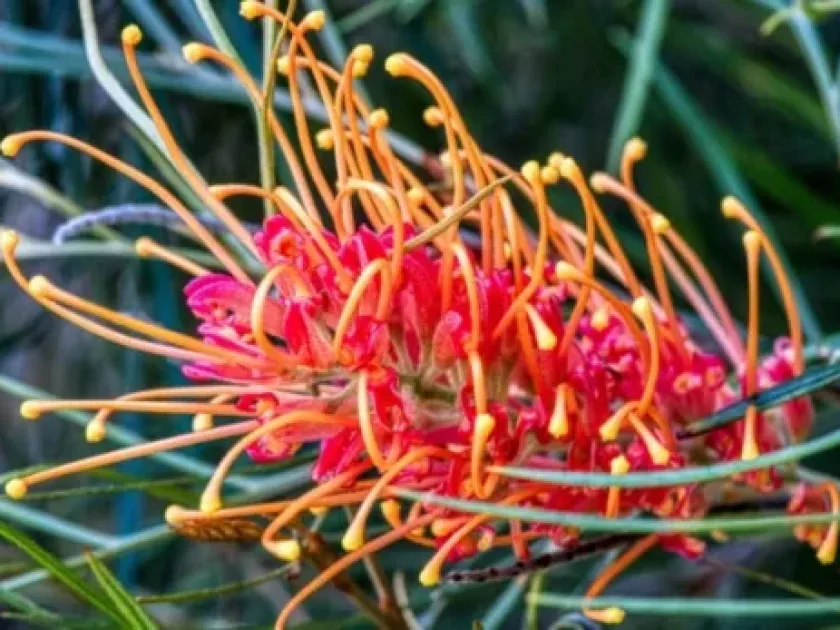
Grevillea johnsonii is a distinctive evergreen shrub belonging to the Proteaceae family, native to the eastern parts of Australia. It is highly regarded by gardeners for its needle-like foliage and vibrant, spider-like flower clusters that provide significant ornamental value.
The plant thrives in full sun exposure and requires well-draining soil to perform optimally. It is particularly sensitive to soil composition, favoring acidic conditions and showing a significant intolerance to high levels of phosphorus in the growing medium.
In terms of climate, Grevillea johnsonii is best suited to Mediterranean or warm temperate zones. It is frost-tender and requires protection during winter if grown in cooler regions, making container cultivation a common practice for enthusiasts outside its natural range.
Agricultural management involves careful irrigation practices. The root system is susceptible to rot if allowed to sit in water, meaning that irrigation must be minimal once the plant is established, allowing the soil to dry out between watering sessions.
The primary economic and horticultural use of the plant is in landscape design and the cut flower industry. Its long-lasting blooms and unique structure make it an excellent choice for xeriscaping, bird-attracting gardens, and sophisticated floral arrangements.
Main diseases and pests
The most common health issues for Grevillea johnsonii relate to fungal pathogens that attack the root system, often exacerbated by overwatering or poor drainage. Root rot is frequently the leading cause of plant mortality in improper garden conditions.
Pests such as scale insects and mealybugs can occasionally infest the stems and leaves. These pests thrive in stagnant air conditions, extracting nutrients and weakening the plant's structural integrity if left unmanaged.
Aphids may also appear during the rapid growth phase of the spring season. While generally not fatal, large aphid colonies can cause foliage deformation and create conditions for secondary fungal growth on the sticky secretions they produce.
Maintenance of plant health is best achieved through strict adherence to water management protocols and ensuring excellent airflow around the foliage. Fertilizing should be kept to a minimum and restricted to specific low-phosphorus blends designed for native Proteaceae.
Preventative care also involves regular pruning. By thinning out the dense growth, gardeners can promote healthier airflow and reduce the humidity levels that favor the development of various mildew and fungal diseases.