
Grevillea fililoba
Grevillea fililoba
Description
Growing requirements
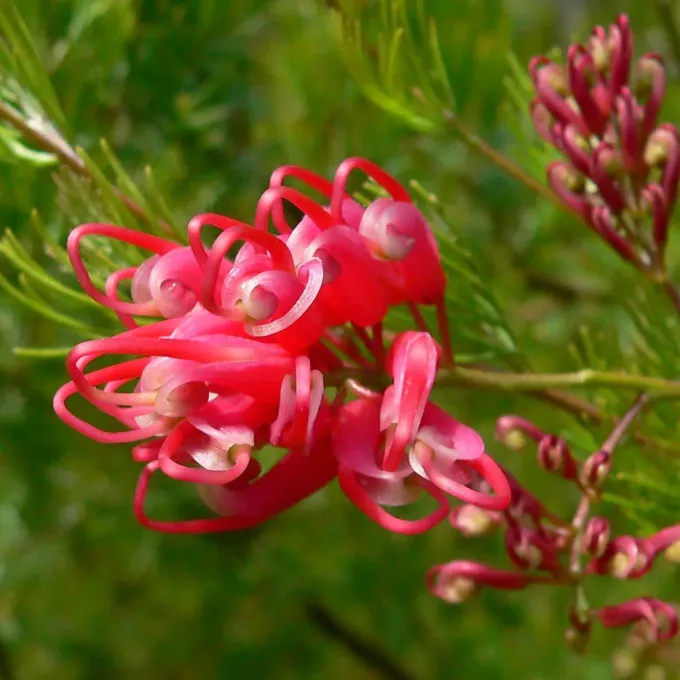
Grevillea fililoba is a distinctive evergreen shrub belonging to the Proteaceae family. Native to Western Australia, it is highly regarded by landscape designers for its unique, needle-like foliage and architectural form.
The plant thrives in Mediterranean-type climates, requiring full sun exposure to maintain its dense habit and promote flowering. It is well-adapted to poor, sandy, and well-drained soil conditions.
Good drainage is the most critical requirement for growing this species. In gardens with heavier soils, it is recommended to plant on raised beds or slopes to ensure that water does not accumulate around the root system.
Fertilization should be handled with caution. As a member of the Proteaceae family, Grevillea fililoba is sensitive to phosphorus; therefore, phosphorus-free fertilizers designed for native plants are strongly advised.
Pruning is essential for maintaining the shrub's aesthetic appeal. Light trimming after the flowering period helps keep the plant compact and encourages a flush of fresh, healthy growth for the following season.
Main diseases and pests
Root rot, caused by Phytophthora species, is the primary threat to this plant. It is usually triggered by inadequate drainage or overwatering, leading to rapid decline and death of the shrub.
Pests such as scale insects or spider mites may occasionally infest the foliage, particularly if the plant is grown in a stressed or confined environment with poor air circulation.
In humid regions, fungal leaf spot diseases can occur. Preventive measures include ensuring good spacing between plants to maximize airflow and avoiding overhead irrigation.
If pests are detected, it is recommended to use environmentally friendly soaps or neem oil, as the plant can be sensitive to harsh synthetic chemicals found in some common pesticides.
Early detection is vital for plant health. Regularly inspect the interior of the foliage for signs of webbing or discoloration, ensuring that prompt action can be taken if an infestation begins.