
Verbena hybrida
Glandularia x hybrida x Glandularia peruviana
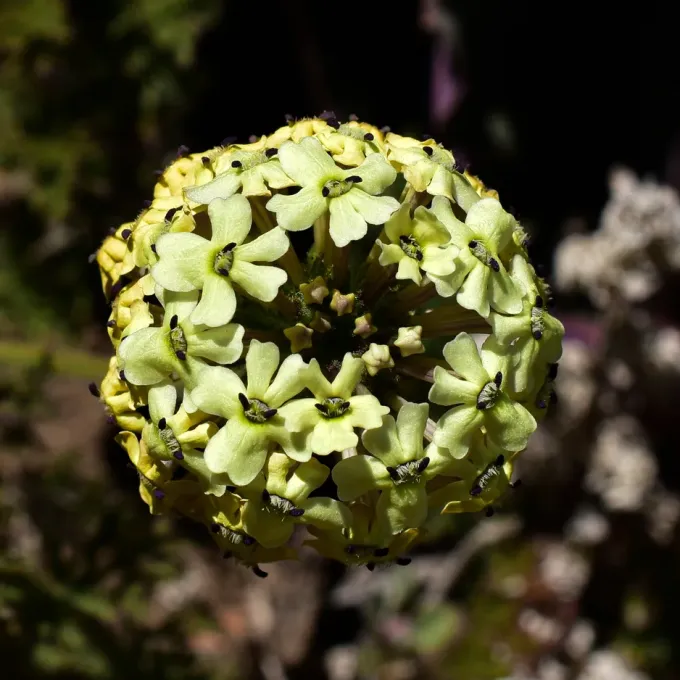
Description
Sowing dates
Verbena hybrida is an ornamental perennial usually cultivated as an annual. In temperate climates, seeds should be started indoors in late winter to ensure early flowering, as the plant has a relatively slow germination process.
Seeds require light to germinate effectively and should be sown on the surface of a moist, fine-textured growing medium. Maintaining a consistent temperature between 20 and 24 degrees Celsius is crucial for high germination rates.
After the appearance of true leaves, seedlings are transplanted into individual containers. This process encourages strong root development and prevents competition between young plants, ensuring they grow robustly before transplanting.
Hardening off is a mandatory step that must be performed over several days. Moving plants gradually from a greenhouse to outdoor conditions prevents transplant shock and helps them adapt to wind and direct sunlight.
Direct sowing in the garden is only feasible in regions with very long, warm growing seasons. Even in such cases, protecting young plants from sudden temperature drops remains an essential part of the agricultural process.
Growing requirements
As a member of the Verbenaceae family, this hybrid thrives in full sun exposure. It requires at least six to eight hours of direct sunlight daily to produce abundant flower clusters and maintain a compact growth habit.
The ideal soil for this crop is light, well-draining, and moderately fertile. Heavy clay soils can be improved by adding organic matter or grit to ensure proper aeration, which prevents the roots from becoming waterlogged.
Watering should be deep but infrequent, allowing the top layer of the soil to dry out between applications. Consistent moisture is necessary for seedling growth, while established plants show a remarkable tolerance to drought.
Regular fertilization with a balanced, slow-release fertilizer is recommended throughout the blooming season. High potassium and phosphorus levels support continuous flowering and improve the overall resilience of the plant to environmental stress.
Deadheading faded flowers is a standard horticultural practice for Verbena hybrida. Removing spent blooms prevents the plant from setting seeds and redirects its energy toward producing new buds, significantly extending the blooming period.
Main diseases and pests
Powdery mildew is the most common fungal disease affecting this crop, appearing as white dust on foliage during humid and stagnant air conditions. Improving airflow around the plants is the most effective preventative measure.
Root rot is often caused by overwatering or soil compaction. It is essential to ensure that containers have proper drainage holes and that garden beds are positioned in areas where water does not accumulate after rainfall.
Pests like aphids, spider mites, and whiteflies frequently attack the soft tissue of the plant. These insects can cause stunted growth and chlorosis, necessitating prompt identification and treatment to preserve the plant's beauty.
Integrated pest management, including the use of neem oil or insecticidal soaps, is often sufficient for small-scale infestations. In severe cases, systemic insecticides may be required to protect the integrity of the planting.
Cultural practices such as removing garden debris and avoiding overhead watering help mitigate the risk of disease transmission. Keeping the planting area clean is fundamental to maintaining a healthy and productive display of Verbena hybrida.