
Garland flower
Daphne cneorum L.
Description
Growing requirements
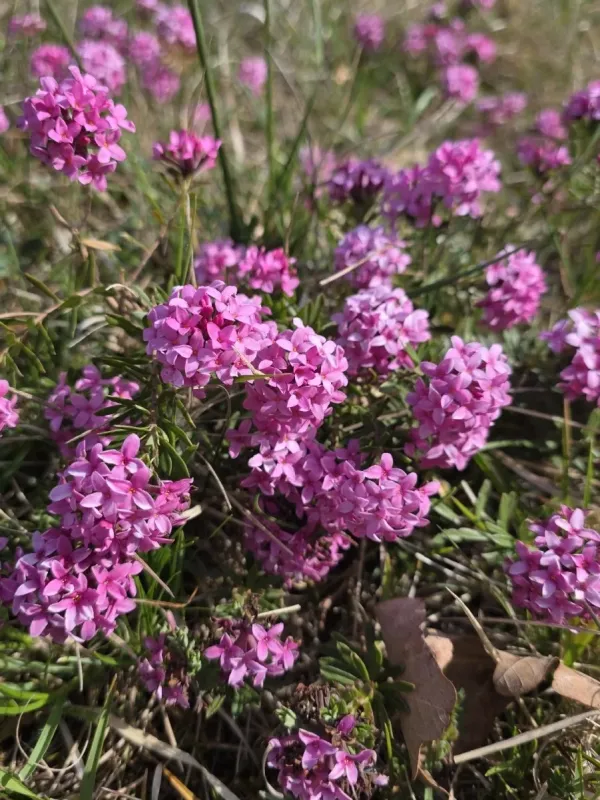
The Garland flower (Daphne cneorum) is a low-growing, evergreen shrub belonging to the Thymelaeaceae family. Originating from the mountainous regions of Europe, this plant is highly prized for its trailing habit and dense clusters of fragrant pink flowers.
Botanically, the plant is distinguished by its small, leathery leaves and its preference for forming thick, prostrate mats. It is an essential component for alpine gardens, rock walls, and well-drained slopes.
The success of cultivation depends primarily on soil composition; the plant demands alkaline to neutral soil that is exceptionally well-drained. Heavy clay soils are unsuitable and often lead to failure unless modified with organic matter and grit.
Regarding climate, the Garland flower thrives in cool, temperate environments with full exposure to sunlight. Excessive heat in southern regions may necessitate light afternoon shade to prevent heat stress and foliage scorching.
Maintenance involves providing adequate moisture without allowing the soil to remain waterlogged. Propagation is most effectively managed through layering or softwood cuttings in late summer, as the plant is notoriously slow to establish from seed.
Main diseases and pests
Root rot is the most significant threat to the Garland flower, typically occurring when the plant is exposed to poor drainage or overly compacted, damp soil conditions during winter.
Fungal leaf spot diseases may appear during periods of high humidity and poor air circulation, manifesting as dark lesions on the foliage that require immediate removal and fungicidal treatment.
Aphids can be a common nuisance, particularly in spring, when they congregate on the tender, developing flower buds and new stem growth, potentially stunting the bloom.
Mites may also affect the plant during hot, dry spells, causing the leaves to lose their glossy appearance and eventually yellowing them if left unmanaged.
Good horticultural practice, such as thinning the canopy for better airflow and ensuring correct soil pH, serves as the best preventative measure against most pests and common plant ailments.