
Three-nerved Gagea
Gagea trinervia
Description
Growing requirements
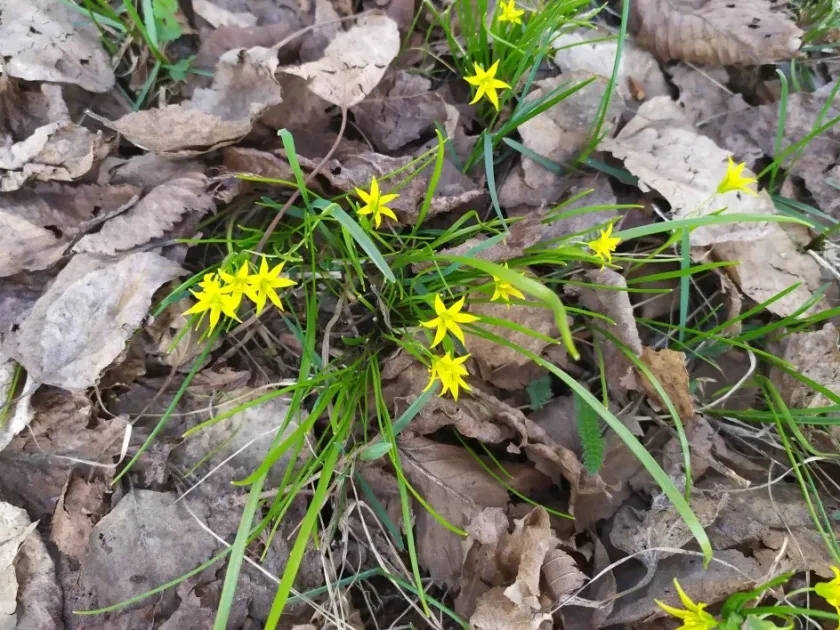
The Three-nerved Gagea (Gagea trinervia) is a perennial herbaceous plant belonging to the lily family (Liliaceae). As a typical spring ephemeral, it concentrates its entire biological activity into a short period of favorable moisture and temperature in the early spring.
The native range of this species extends across the mountainous and steppe regions of Central Asia. It is highly adapted to environments where vegetative growth must be completed before the onset of extreme summer heat and soil drought.
Botanically, the plant features a small bulb serving as a storage organ. Its stem is typically low-growing, supporting a few narrow, linear leaves and distinct yellow, star-shaped flowers that bloom shortly after the snow melts in its habitat.
Climatic requirements are focused on a cold, moist spring phase followed by a warm, dry summer rest phase. In cultivation, mimicking these natural cycles is essential for the plant's long-term survival and propagation, as constant moisture can lead to physiological distress.
The soil should be light, well-draining, and rich in mineral content. Sandy or stony soils are preferred to ensure that no stagnant water remains around the bulb during the dormancy phase, as this is the primary cause of plant failure in non-native environments.
Main diseases and pests
Fungal diseases are the primary threat to the Three-nerved Gagea, particularly bulb rot caused by excessive soil humidity. Improper drainage during the dormancy period often leads to the rapid decay of the bulb's basal plate and internal tissues.
In terms of pests, soil-dwelling larvae, such as those of the onion fly, pose a significant risk by consuming the bulb interior. Maintaining proper crop hygiene and choosing sites that were not previously used for related Liliaceae species helps in minimizing the impact of these pests.