
Koch's star-of-Bethlehem
Gagea caroli-kochii
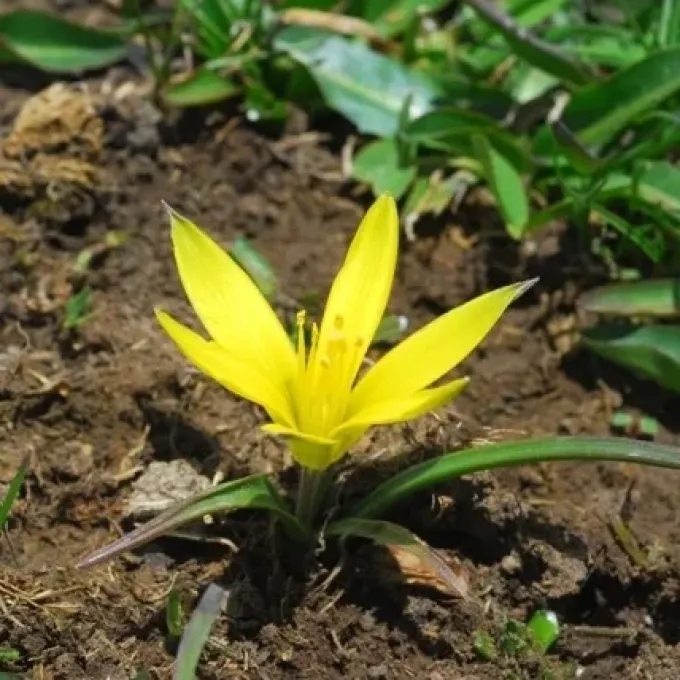
Description
Growing requirements
Koch's star-of-Bethlehem (Gagea caroli-kochii) belongs to the Liliaceae family. It is a perennial bulbous plant characterized by an early spring growth cycle typical of ephemeroids.
The plant is native to the Caucasus region, thriving in rocky slopes and steppes. It prefers well-drained, nutrient-rich soils that prevent moisture stagnation during the rainy season.
Full sun exposure is a critical requirement for this species, as it needs warmth to complete its rapid development before the start of the summer dormancy period.
Agricultural management requires careful handling because the root system is delicate and can be damaged by frequent soil disturbance or intense weeding.
A dormant phase in dry, warm soil conditions is essential for the bulb to accumulate energy for the next growing season, mimicking its natural environment.
Main diseases and pests
Fungal diseases are the primary threat to the crop, particularly gray mold and Fusarium rot, which can occur if drainage is insufficient during the spring growth phase.
Bulb mites and various fly larvae are common pests that attack the basal plate of the bulb, causing the plant to wither and eventually die.
Rodents such as voles can cause significant losses in the field, as they feed on the bulbs during the late winter and early spring months.
The accumulation of soil-borne pathogens can be managed through crop rotation, avoiding the cultivation of bulbous plants in the same area for several consecutive years.
Providing adequate spacing and ensuring the soil surface dries out quickly after spring rains are key strategies for reducing disease pressure.