
Gagea transversalis
Gagea transversalis
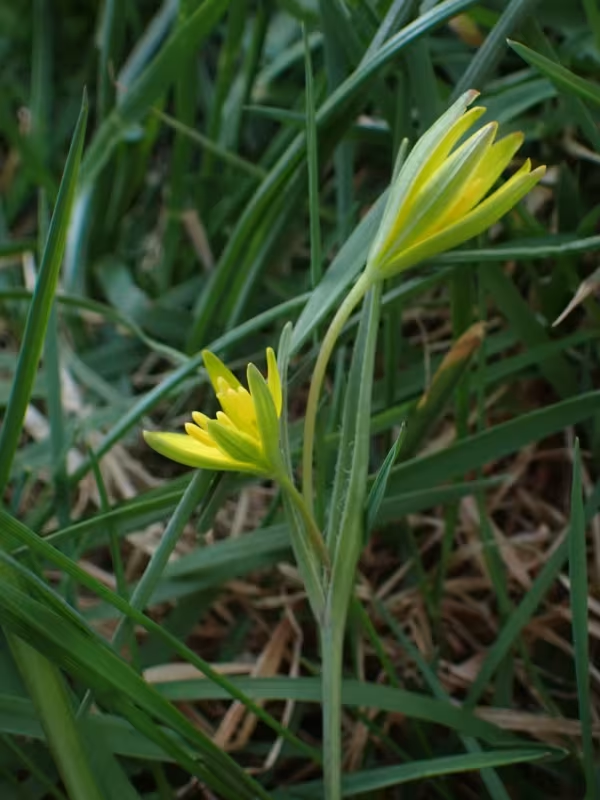
Description
Growing requirements
Gagea transversalis is a perennial herbaceous plant belonging to the Liliaceae family. As a characteristic spring ephemeral, it completes its vital cycle during the short window of favorable spring conditions, utilizing nutrients stored in its bulb to produce flowers and seeds before the arrival of summer heat.
The plant is native to specific regions of the Eurasian continent, typically inhabiting forest edges, meadows, and rocky slopes. Its distribution is strongly correlated with areas that experience a distinct pulse of moisture during early spring, which is critical for its reproductive success.
Regarding soil requirements, this species favors well-drained, nutrient-rich substrates that are not prone to prolonged waterlogging. It performs best in soils with neutral to slightly alkaline pH levels, often mirroring the composition of limestone-rich habitats where it is found in the wild.
The botanical structure of Gagea transversalis includes a singular basal leaf and a bulb that serves as both a storage and survival organ. The flowers are typically yellow, adapted to attract early-season pollinators that emerge alongside the plant during the first warming days of the year.
Economic and practical applications for this species are limited, focusing primarily on ecological preservation and specialty botanical collections. It is recognized as a significant component of local biodiversity, and its conservation is important for maintaining the health of spring-flowering ecosystems in its native range.