
Crimean Star of Bethlehem
Gagea taurica
Description
Growing requirements
The Crimean Star of Bethlehem, scientifically known as Gagea taurica, is a member of the Liliaceae family. It is a bulbous perennial herb that functions as an ephemeral, completing its primary life cycle during the early spring season before entering a long summer dormancy.
Originating from the Crimean Peninsula, this plant is naturally adapted to rugged environments including rocky slopes and dry grasslands. Its evolutionary history has endowed it with the ability to thrive in poor soils and withstand the harsh, dry summer conditions typical of its native range.
When cultivated, the plant requires excellent drainage to prevent bulb rot. A light, sandy loam soil with good aeration is essential to mimic its natural habitat. It performs best in full sun, where the radiant energy supports rapid growth and successful seed production in early spring.
Climatologically, the plant is hardy and well-suited to regions with cold winters and distinct seasonal variations. The lack of irrigation during the dormancy period is crucial, as the bulbs need a dry soil environment to prevent premature sprouting or fungal decay.
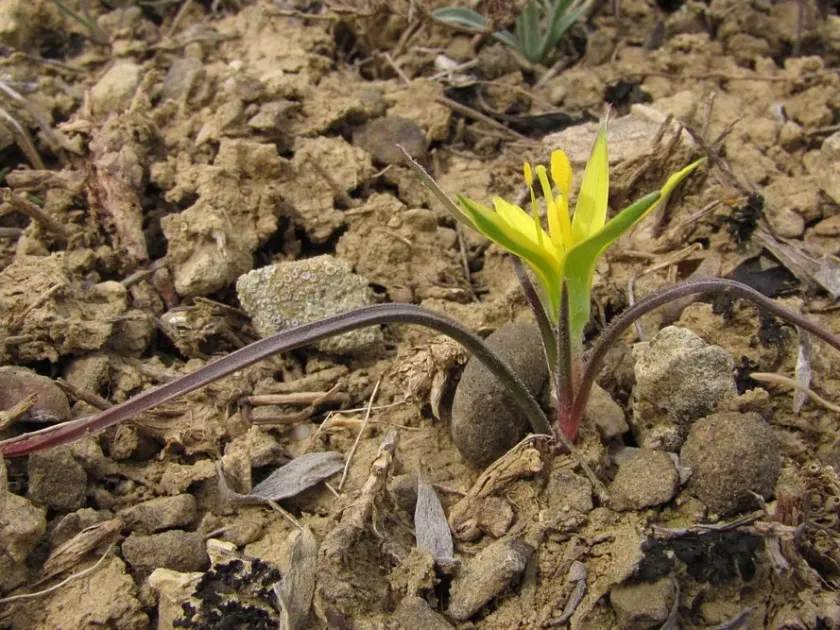
The botanical features include a single, linear basal leaf and a delicate stem topped with star-shaped, yellow flowers. The bulb acts as a vital storage organ, packing essential nutrients that fuel the plant's emergence immediately after the snow melts in its habitat.
Main diseases and pests
Fungal pathogens represent the most significant threat to Gagea taurica in artificial cultivation. Botrytis and various Fusarium species can lead to root and bulb rot, especially when drainage protocols are neglected and the soil remains overly saturated for prolonged periods.
Pests such as the bulb mite (Rhizoglyphus echinopus) can cause substantial damage to the subterranean structures of the plant. These microscopic pests feed on the bulb tissues, creating entry points for secondary bacterial infections that lead to plant decline.
Gastropods, including slugs and snails, pose a seasonal threat during the early growth stages. They consume the succulent foliage, which significantly weakens the plant's ability to accumulate the energy required for the following season's growth cycle.
Environmental stress, such as extreme late-season frosts during the active growth period, can damage floral tissues and inhibit seed formation. While the plant is cold-tolerant, sudden freezes after a warm spell can occasionally compromise early blooms.
Integrated pest management strategies are advised to maintain the health of the bulb population. This includes the regular monitoring of soil moisture levels, the removal of diseased individuals, and the application of organic treatments to deter common insect invaders.