
Reticulated star-of-Bethlehem
Gagea reticulata
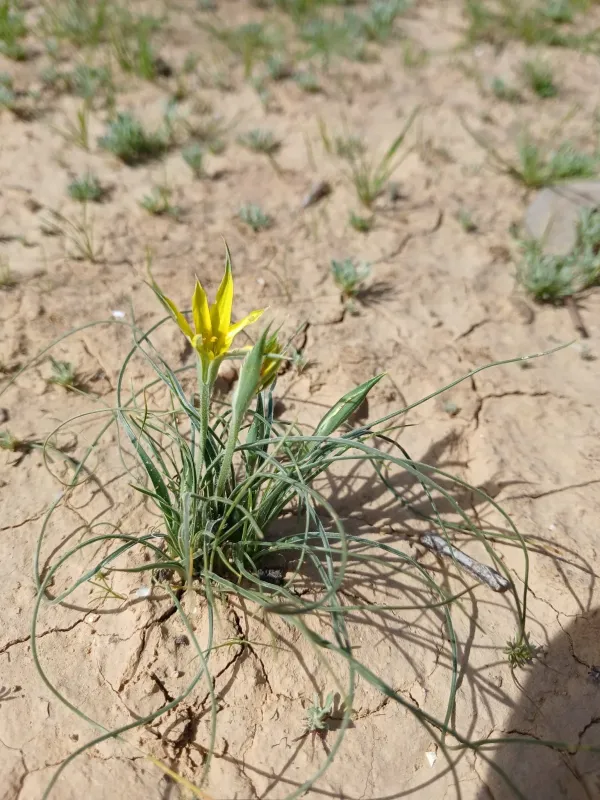
Description
Sowing dates
Gagea reticulata is a classic spring ephemeral that completes its active growth cycle within a very short period in early spring.
Seed propagation is the primary method in the wild, with seeds dispersing naturally after the maturation of the capsule in late spring.
For cultivation purposes, bulbs can be planted in autumn, allowing them to establish roots before the soil freezes completely.
It is essential to plant the bulbs at a depth corresponding to two or three times their size to protect them from winter frost.
Because the foliage dies back completely by early summer, careful site marking is necessary to avoid accidental disturbance during the dormant period.
Growing requirements
This member of the Liliaceae family thrives in open, sunny locations where it can maximize light absorption before trees leaf out.
The ideal soil is sandy, well-draining, and slightly alkaline, as heavy clay soils tend to hold too much moisture and cause bulb rot.
Consistent moisture is required during the rapid growth and flowering phase, but the plant requires dry conditions during summer dormancy.
Gagea reticulata is well-adapted to steppe and semi-arid climates, reflecting its evolutionary origin in rocky or semi-desert habitats.
High air circulation is beneficial for preventing fungal growth, making rocky gardens or slopes the best environments for this plant.
Main diseases and pests
Bulb rot, caused by fungal pathogens such as Fusarium species, is the most common and devastating issue in poorly drained soils.
Insect pests, particularly soil-dwelling larvae, often target the succulent bulb tissues, leading to reduced vigor and poor flowering.
Small mammals and rodents are significant threats, as they forage for the nutrient-rich bulbs during the late winter and spring seasons.
Competition from aggressive grasses and weeds can lead to the suffocation of the plants, as the ephemeral foliage lacks the strength to compete.
Excessive moisture combined with high temperatures in spring can trigger leaf blight, effectively ending the growing season prematurely.