
Gagea pusilla
Gagea pusilla
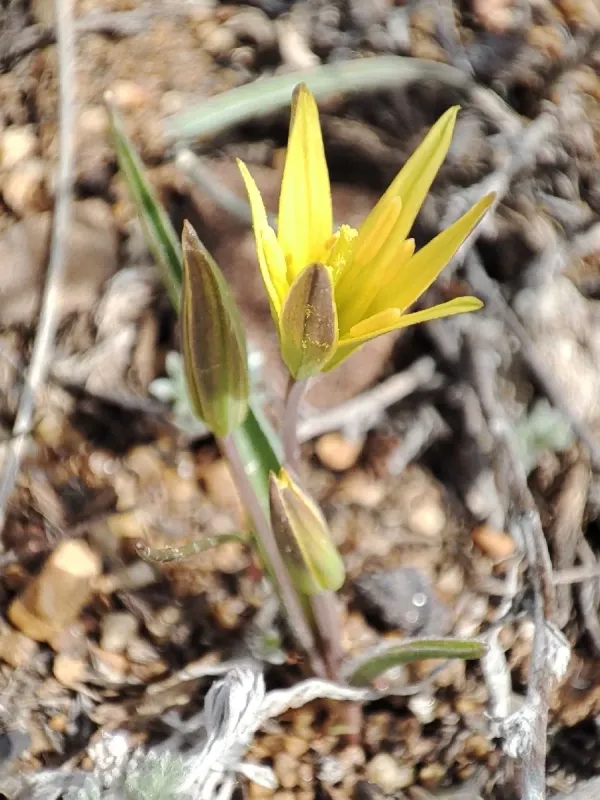
Description
Sowing dates
Gagea pusilla belongs to the group of spring ephemerals, meaning its life cycle is strictly tied to the early spring period. In the wild, reproduction occurs primarily through seeds or offset bulbs.
In cultivation or during introduction attempts, it is recommended to sow seeds immediately after they mature in late spring or before winter. Seeds require stratification, as they germinate only after being exposed to cold temperatures in the soil.
For vegetative propagation, offset bulbs should be planted during the phase of deep dormancy, which occurs after the aerial part of the plant dies back in early summer.
The planting depth for seeds or bulbs should not exceed 3–5 centimeters, as the plant has relatively low germination energy through dense soil layers.
It is important to consider that the plant does not tolerate transplanting during active vegetation, so all handling of planting material must be completed before the sap starts to rise.
Growing requirements
This plant belongs to the Liliaceae family and prefers well-lit areas, as its vegetation period occurs before the canopy of trees and shrubs fully develops.
The plant is not overly demanding regarding soil composition, but it thrives best in light, well-drained loamy soils with moderate humus content and a neutral pH level.
Gagea pusilla reacts extremely negatively to stagnant moisture in the root zone, which can lead to bulb rot during snowmelt or spring floods.
The optimal climatic regime for the species is moderately continental, with distinct seasonal changes and sufficient moisture during the early spring season.
The crop features high winter hardiness, as the bulbs are capable of surviving soil freezing while in a state of deep physiological dormancy.
Main diseases and pests
The primary threat to Gagea pusilla is the development of fungal diseases, such as grey mold and fusarium wilt, which flourish under conditions of excessive humidity.
Pests that damage bulbous crops, including onion fly larvae and nematodes, can significantly reduce the plant population in areas with poor crop rotation practices.
Rodents, such as field mice, often damage bulbs during the winter, which serves as a major limiting factor in their natural habitats.
Unfavorable weather conditions, such as sudden late frosts after active growth has begun, can cause damage to the tips of young shoots.
Competition from more aggressive herbaceous plants and weeds also suppresses the development of Gagea pusilla, especially if the soil contains excessive amounts of nitrogen fertilizers.