
Gagea podolica
Gagea podolica
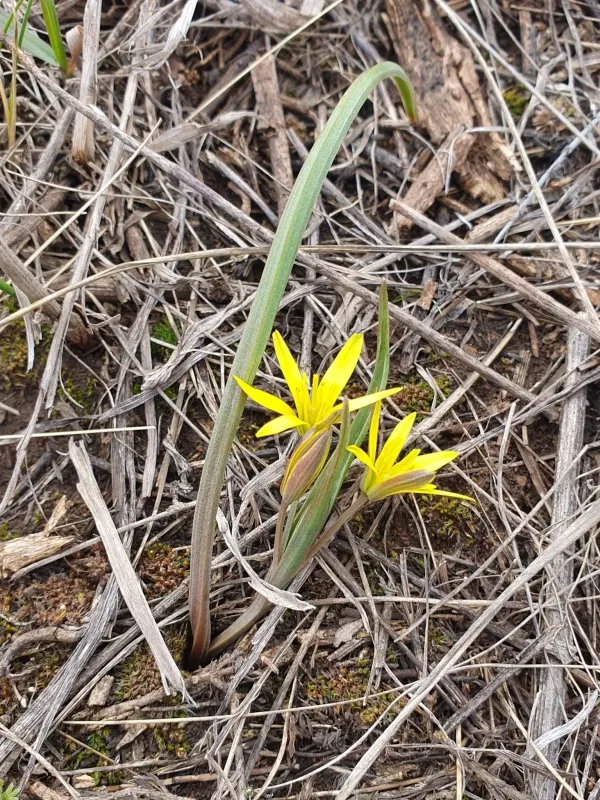
Description
Growing requirements
Gagea podolica, commonly known as a type of Gagea or yellow star-of-Bethlehem, is a bulbous perennial belonging to the Liliaceae family. It is an early spring ephemeral plant that completes its life cycle before the canopy of trees fully develops.
This species is native to the steppe and forest-steppe regions of Eastern Europe. It thrives in open, sunny environments where spring moisture is abundant, allowing it to store energy for the subsequent summer dormancy period.
The plant requires well-drained, fertile, and light soil. Heavy clay soils are unsuitable as they increase the risk of waterlogging, which often causes the bulbs to decay during the dormant phase.
Optimal growth conditions involve exposure to full spring sun. As the temperatures rise and the days get longer, the plant naturally withers, and its above-ground parts disappear, moving the energy to the underground bulb.
Agricultural management is relatively simple, requiring minimal intervention. The main goal is to maintain soil structure and ensure that the area is not choked by aggressive weeds during the active growing phase in early spring.
Yield
The yield of Gagea podolica is primarily measured by the multiplication rate of its bulbs. This plant is highly efficient at producing offsets (bulblets) around the mother bulb, which ensures steady colonization of the area.
For specialized nurseries, the propagation rate is a key metric. Under favorable conditions, the biomass increase is significant, allowing for sustainable harvesting of planting material every few years.
Seed production is another way the plant spreads. While slower than vegetative reproduction, it maintains genetic diversity within the population, which is beneficial for long-term health and adaptation to environmental changes.
The plant is not a commercial agricultural staple but has niche value in rock garden design and as an early spring forage component for pollinators. It provides early-season nectar when few other plants are in bloom.
Proper harvesting of bulbs for transplanting should occur after the foliage has turned yellow and dried, ensuring that the bulbs have entered their physiological resting state.
Main diseases and pests
Fungal pathogens are the primary threat, especially when soil moisture levels are too high. Fusarium species can lead to bulb rot, which is often difficult to eradicate once it has established in a patch.
Pests, particularly bulb-infesting flies and nematodes, can significantly impact population health. These organisms damage the basal plate of the bulb, causing stunted growth and eventual plant mortality.
Effective management includes crop rotation and the use of healthy, disease-free planting material. Avoiding over-fertilization with nitrogen is also key, as it can make tissues softer and more susceptible to pathogen entry.
Weeds are major competitors for light and soil nutrients. Since Gagea podolica is a low-growing plant, regular weeding is essential to prevent taller plants from shading it out during its short growing season.
Environmental threats also include soil compaction and chemical runoff, which disturb the delicate balance of the soil microbiota, necessary for the plant's symbiotic root health.