
Nevada star-of-Bethlehem
Gagea nevadensis
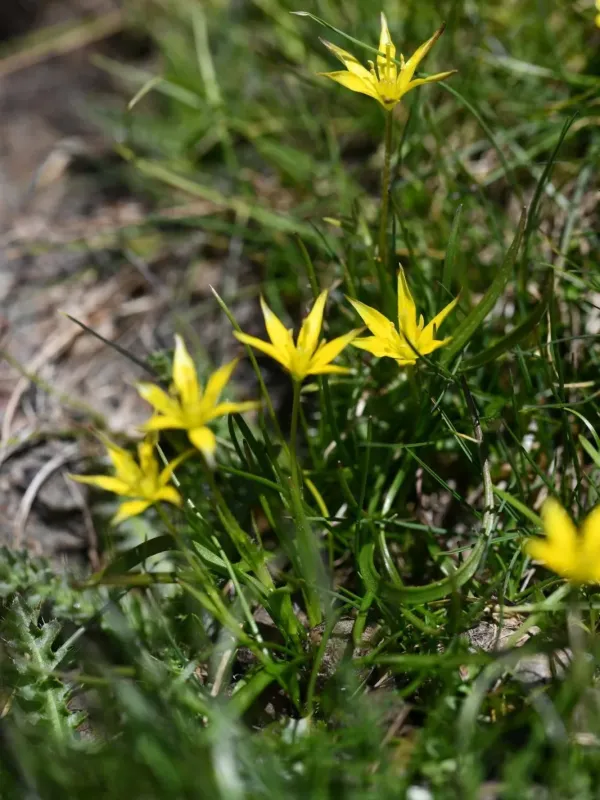
Description
Growing requirements
The Nevada star-of-Bethlehem (Gagea nevadensis) is a perennial herbaceous plant belonging to the Liliaceae family. It is a miniature ephemeral species characterized by a very short growth cycle, which allows it to thrive in high-altitude environments where favorable conditions are brief.
The native habitat of this plant is located in mountainous regions, specifically the Sierra Nevada range. It prefers rocky slopes and alpine meadows where the soil warms up quickly following the snowmelt, providing the necessary thermal conditions for rapid development.
To successfully cultivate this plant, one must provide a substrate that mimics its natural habitat: excellent drainage and low organic content are essential. Sand and grit mixtures are ideal to prevent the moisture accumulation that leads to bulb degradation during the summer dormancy period.
Botanically, it features narrow, grass-like basal leaves and characteristic bright yellow, star-shaped flowers. The bulb acts as an essential energy reserve, storing nutrients produced during the short photosynthetic window to sustain the plant through the following winter and early spring.
In terms of agricultural or horticultural use, the Nevada star-of-Bethlehem is primarily valued in specialized alpine collections. Its cultivation requires careful regulation of irrigation to ensure the bulbs remain dry enough during dormancy, preventing physiological stress.
Main diseases and pests
The main threat to the health of Gagea nevadensis is root and bulb rot caused by excessive soil moisture. This is especially prevalent in poorly drained soils or environments with low air circulation, which favor the growth of pathogenic fungi.
Pests such as onion fly larvae pose a significant risk, as they feed on the internal tissues of the bulb. Infestation often results in the stunted growth of the plant or its total collapse during the flowering phase, necessitating preventive soil treatments.
Viral infections can affect the vitality of the plant, often manifesting as mosaic patterns on the foliage or abnormal color breaks in the flowers. Since there is no cure for such infections, the removal and destruction of affected specimens is the recommended management strategy.
Weed infestation is another critical factor that hinders the growth of this small species. The plant is not competitive, and taller weeds can easily shade it out, depriving it of the solar radiation it requires to produce enough energy for the next year's cycle.
Standard horticultural practice involves periodic inspection of the soil surface for signs of pest activity and maintaining a sterile environment during propagation. Avoiding high-nitrogen fertilizers is also recommended to prevent excessive vegetative growth that is more susceptible to fungal pathogens.