
Gagea minima
Gagea minima
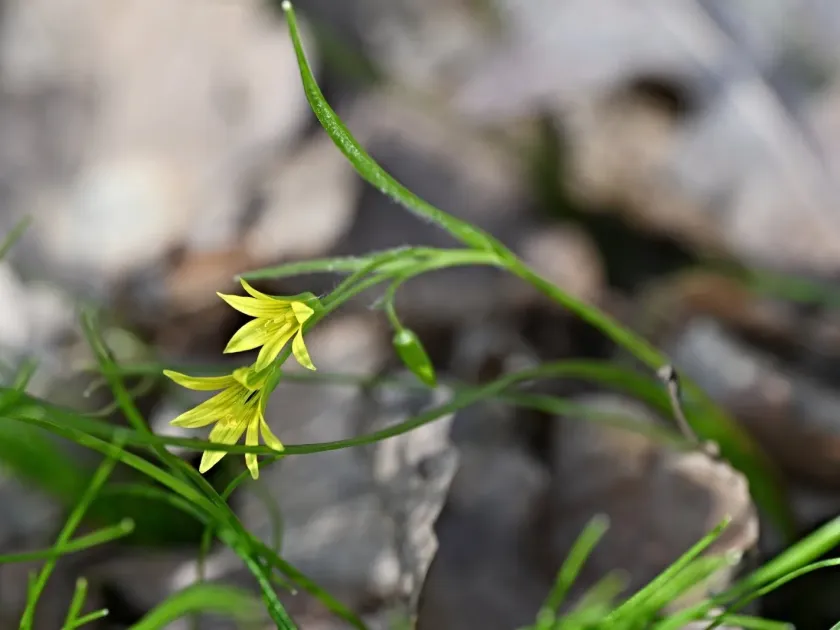
Description
Growing requirements
Gagea minima, commonly known as the least gagea, is a perennial bulbous plant belonging to the Liliaceae family. It is a distinct spring ephemeral that completes its vegetative and reproductive stages before the forest canopy fully closes.
The plant thrives in nutrient-rich, well-draining soils within temperate forests and meadow margins across Eurasia. It requires sufficient soil moisture during the early spring growth phase to ensure proper bulb development.
Climatic requirements involve a cold winter dormant period followed by a rapid temperature increase in early spring. The plant is adapted to variable light conditions but prefers areas that provide sunlight before the leaf-out of surrounding trees.
Botanically, it is identified by a single basal leaf and a cluster of small, yellow, star-shaped flowers. Its underground bulb system allows it to store energy efficiently, facilitating survival during the long dormant summer and winter months.
In terms of agricultural and horticultural use, Gagea minima is prized in botanical collections and wild-style landscaping for its early blooming period, which adds diversity to early season garden displays.
Main diseases and pests
The primary threats to Gagea minima include fungal pathogens, such as Fusarium, which can cause bulb rot if the substrate remains waterlogged for extended periods during the growing season.
Soil-dwelling pests, including onion maggots and wireworms, pose a significant risk as they feed on the bulbs, leading to stunted growth or total plant failure in susceptible garden sites.
Extreme spring frost events, when the plants are at the stage of emergence, can cause structural damage to the floral stems and leaves, hindering the energy replenishment process for the bulb.
Invasive weeds that grow rapidly in early spring can shade out the small Gagea minima, effectively competing for limited resources during its short window of active growth.
Human interference, such as soil compaction or improper excavation of bulb-containing areas, can physically destroy the plant populations and prevent natural vegetative multiplication.