
Liotard's star-of-Bethlehem
Gagea liotardii
Description
Growing requirements
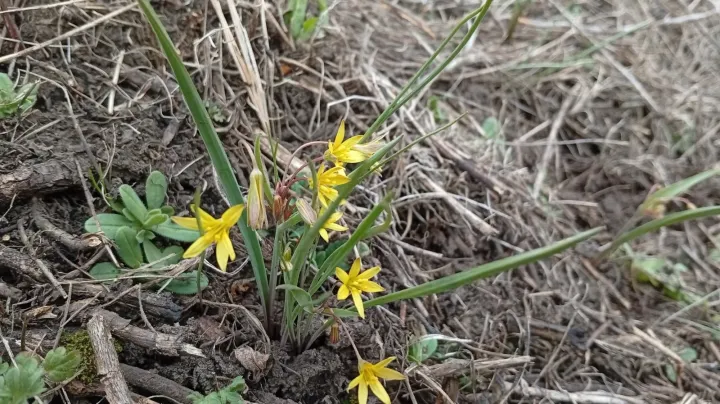
Liotard's star-of-Bethlehem (Gagea liotardii) is a perennial herbaceous plant belonging to the Liliaceae family. It is recognized as a spring ephemeroid, characterized by a rapid growth cycle that occurs primarily in early spring before the surrounding canopy fully develops.
The plant features a small bulb encased in a common tunic, from which linear basal leaves emerge. Its stem is typically erect, measuring between 5 and 15 cm in height, and terminates in an inflorescence consisting of star-shaped, bright yellow flowers.
Native to mountainous regions of Europe and Western Asia, this species thrives in well-drained, rocky environments. It is highly adapted to subalpine meadows and open woodland areas where it receives intense light exposure during the early part of the year.
In terms of cultivation, it requires well-aerated soil with moderate moisture content. It is sensitive to waterlogged conditions, which can lead to rot, so excellent drainage is a mandatory requirement for maintaining healthy bulbs throughout the dormancy period.
Its primary agricultural and horticultural value lies in its decorative use for rock gardens and naturalized landscape projects. It is appreciated by gardeners for its early blooming and ability to naturalize in cool-climate environments with clearly defined seasons.
Main diseases and pests
The main threats to the plant include fungal pathogens such as bulb rot (Fusarium and Botrytis species), which typically develop under conditions of high soil humidity and poor air circulation. Careful site selection is essential to mitigate these risks.
Pests such as bulb mites and various soil-dwelling dipteran larvae pose a significant risk to the underground structures. Regular inspection and avoiding the accumulation of decaying plant material around the bulbs help in managing these potential pest outbreaks.