
Grainy star-of-Bethlehem
Gagea granulosa
Description
Growing requirements
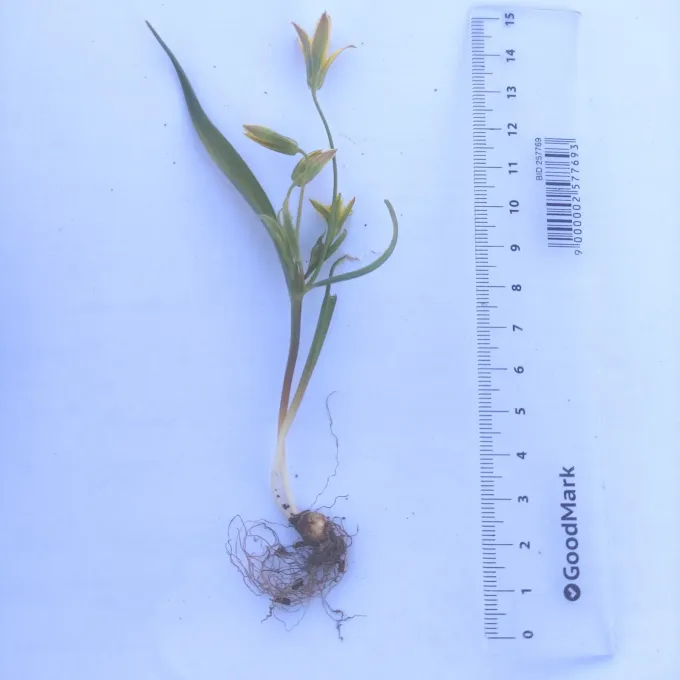
The Grainy star-of-Bethlehem (Gagea granulosa) is a member of the Liliaceae family. It is a bulbous perennial that follows an ephemeral growth cycle, completing its above-ground life phase during the early spring months.
The natural range of this species primarily includes the steppe and forest-steppe zones of Eurasia. It is typically found in habitats characterized by open, sunny exposures such as rocky hillsides and meadows where early moisture is abundant.
Regarding soil requirements, the species thrives in well-drained, lightweight soils. It is critical that the substrate dries out during the summer dormant phase to ensure the health of the bulbs and prevent physiological decay.
Climatically, the plant is highly adapted to continental climates with cold winters. Its physiological processes are triggered immediately after the snow melts, taking advantage of the fleeting period before the soil temperature becomes too high.
In terms of agricultural or cultivation potential, it is primarily viewed as a wild biological resource rather than a traditional crop. Its horticultural use is restricted to specialized rock gardens where its unique spring-flowering properties can be appreciated.
Main diseases and pests
The plant is susceptible to various soil-borne pathogens, particularly fungal infections that affect the bulbs. Poor drainage remains the primary factor increasing the vulnerability of the plant to rot diseases.
Pests such as bulb mites and rodents can pose significant threats. Rodents, in particular, may feed on the bulbs during the dormancy period, which often leads to the destruction of entire plant clusters in the field.