
Gagea foliosa
Gagea foliosa
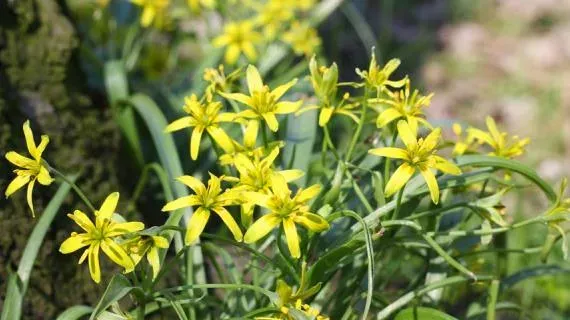
Description
Growing requirements
Gagea foliosa, a member of the Liliaceae family, is a herbaceous perennial recognized for its early spring flowering cycle. As a true ephemeral, the plant completes its life cycle within a few weeks, making efficient use of available moisture and sunlight before the onset of summer drought.
The plant grows from a small, tunicated bulb and develops multiple linear leaves that give rise to its specific epithet. The inflorescence consists of star-shaped, yellow flowers arranged in a corymbose or umbellate cluster, which are highly attractive to early-flying pollinators.
This species is native to Central and Southern Europe and parts of Western Asia. It is typically found in habitats such as stony slopes, meadows, and open woodlands, where the soil warms up quickly after the winter period, providing optimal conditions for initial development.
Cultivation requires well-drained, porous soils that prevent waterlogging during the summer dormancy phase. Gagea foliosa thrives in full to partial sun, as its physiological processes are adapted to the cool and moist conditions of early spring in temperate climates.
Given its specialized requirements, the species is primarily valued in botanical collections and specialized rock gardens. It serves as an important ecological component by providing early resources for pollinators, contributing to the biodiversity of temperate grassland ecosystems.
Main diseases and pests
The primary threat to the health and survival of Gagea foliosa is fungal infection, particularly bulb rot, which is triggered by excessive soil moisture during dormancy. Diseases such as Fusarium wilt can compromise the integrity of the bulb, leading to widespread plant mortality.
Pests, such as onion flies, pose a significant threat to the plant's development. Larvae burrow into the subterranean bulbs, causing significant structural damage that often leads to secondary infections and the weakening of the plant's ability to produce leaves and flowers in the following season.
Competition from taller, more aggressive weeds is another critical factor. Because the plant is an ephemeral, it lacks the ability to compete for light if the soil surface is covered by other vegetation throughout the spring, which results in reduced energy storage in the bulbs.
Small mammals, particularly rodents, can cause significant damage to the bulbs during the dormant season. Predation by these animals can devastate local populations, especially in areas with little natural protection from underground foragers.
Management strategies include maintaining strict moisture control and ensuring excellent soil drainage. Preventive measures such as appropriate spacing and regular weed control during the active growth phase are essential for maintaining the vigor of the plant population.