
Gagea dayana
Gagea dayana
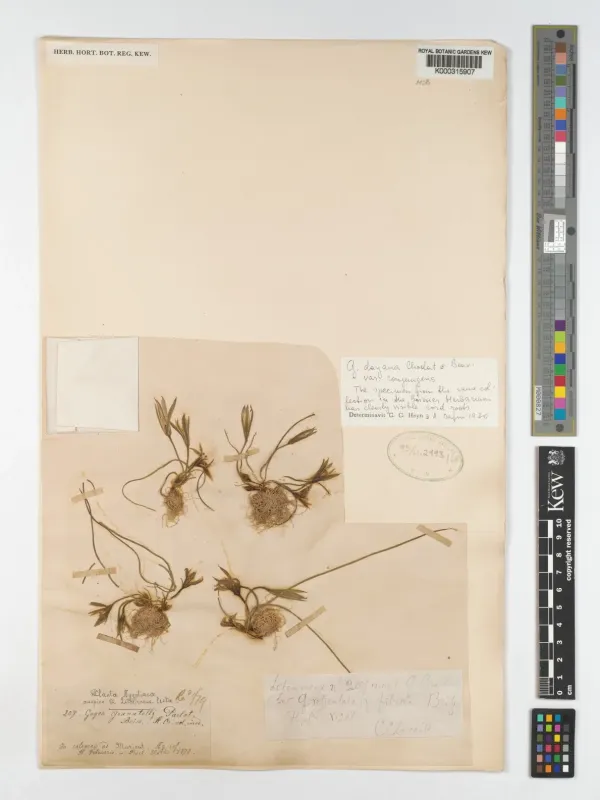
Description
Sowing dates
Gagea dayana is a perennial bulbous plant belonging to the Liliaceae family. It is recognized as a spring ephemeral, completing its vegetative cycle shortly after the winter dormancy period.
The optimal planting time for these bulbs is late summer or early autumn. This timing allows the bulbs to establish their root systems before the onset of winter freezing temperatures.
Bulbs should be planted at a depth of 5–8 centimeters. Maintaining a spacing of approximately 10 centimeters between plants is recommended to prevent overcrowding and ensure adequate airflow.
Vegetative propagation via offsets (small bulblets) is the most effective way to multiply this species. These bulblets develop around the mother bulb and should be separated carefully during the dormancy phase.
Proper site preparation is essential, involving the integration of drainage materials if the existing soil is prone to moisture retention, which can be detrimental to the bulbs.
Growing requirements
This species thrives in sunny, well-drained locations. It is naturally adapted to rocky slopes and steppes where soil aeration is high, and water logging is minimized.
The soil should be loose, rich in organic matter, and have a neutral or slightly alkaline pH. Compacted soils significantly impede the growth of the bulb and the subsequent development of the flower shoot.
Climatic requirements include a cycle of cool, moist spring weather followed by a dry and warm summer period. The dry summer phase is crucial for the bulb to undergo proper maturation and storage of nutrients.
During the active growth phase, light irrigation may be provided if spring rainfall is insufficient. Once the foliage begins to wither, water must be withheld to mimic the natural summer drought.
Regular weeding is necessary to protect the plant, as it is relatively low-growing and cannot compete effectively with taller herbaceous species for sunlight.
Main diseases and pests
Fungal pathogens, such as bulb rot and Fusarium, are the primary threats, particularly in soils with poor drainage. Over-saturation is the leading cause of plant loss in cultivated conditions.
Pests like the onion fly and various species of nematodes can cause significant damage. Early detection and the use of healthy, treated planting material are key control strategies.
Small mammals, including voles and mice, may forage on the bulbs, especially during winter months when alternative food sources are scarce in the soil.
Slugs can feed on the tender young foliage in early spring, reducing the photosynthetic capacity of the plant and weakening the bulb for the following season.
Integrated pest management, including physical barriers for larger pests and biological control for insects, is recommended over the overuse of aggressive chemical agents.