
Flemingia paniculata
Flemingia paniculata
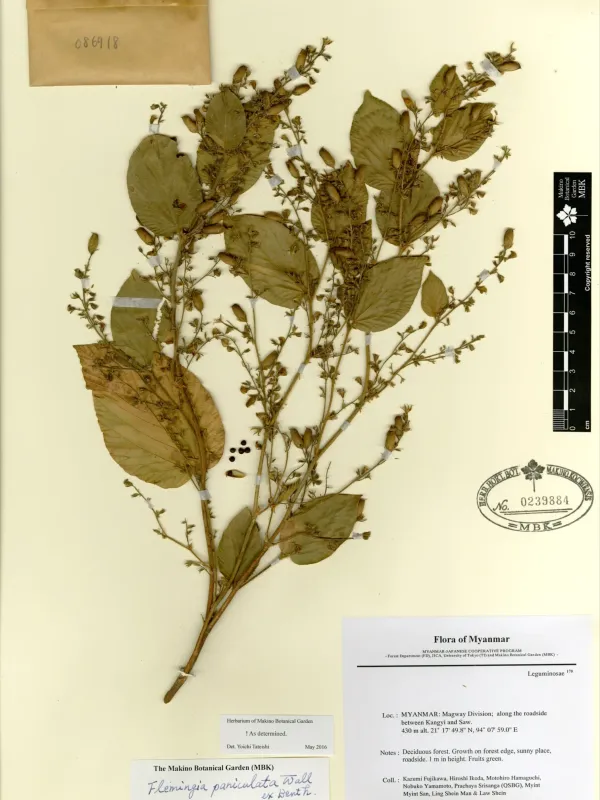
Description
Sowing dates
Flemingia paniculata is a perennial leguminous shrub widely recognized for its ecological and agricultural utility. Seeds are usually sown at the onset of the rainy season to ensure optimal soil moisture levels for germination.
Due to the hard seed coat, scarification or pre-soaking in water is necessary to break dormancy. This technique ensures high germination rates and promotes uniform seedling development.
For large-scale cultivation, seedlings are often grown in nurseries for 8–12 weeks before being transplanted to the field. This increases the survival rate of young plants in harsh environmental conditions.
Planting density depends on the specific use of the crop. For erosion control or living fences, a spacing of 0.5 to 1 meter between plants is standard practice.
The establishment phase requires careful weed management. Once the shrub reaches a height of 50–60 cm, it becomes self-sufficient and highly competitive against weeds.
Growing requirements
This species thrives in tropical and subtropical climates. It is highly adaptable to a wide range of temperatures, performing best between 22°C and 30°C.
Flemingia paniculata is well-known for its tolerance to poor, acidic, and degraded soils. It excels in environments where other high-value crops struggle to establish roots.
The plant is noted for its exceptional drought tolerance, making it an excellent candidate for semi-arid regions. It can survive extended dry periods without significant loss of biomass.
Good soil drainage is essential for healthy growth. Waterlogged areas should be avoided, as stagnant water can lead to root rot and premature plant death.
The shrub is capable of nitrogen fixation, enriching the soil quality naturally. It does not require intensive mineral fertilization to maintain high growth rates.
Yield
The primary yield of Flemingia paniculata is its dense, protein-rich foliage. This biomass is used as high-quality forage for livestock, particularly goats and sheep.
In agroforestry systems, the plant serves as a prolific source of green mulch. Its leaves decompose relatively quickly, releasing nutrients into the soil for companion crops.
Yields can be substantial, with multiple cuttings per year. After pruning, the plant rapidly regenerates, allowing for a sustainable annual output of green manure.
Seed production is consistent once the plant matures. Seeds are often harvested manually or by mechanical means depending on the scale of the plantation.
The long-term biomass productivity remains stable over many years, contributing to the overall sustainability of the agricultural ecosystem where it is planted.
Main diseases and pests
Leaf-eating insects, such as beetles and caterpillars, can occasionally cause damage to the foliage, especially in young plants during the peak of the dry season.
Fungal diseases like powdery mildew and leaf spot may emerge if humidity is too high and airflow is poor. Proper spacing and pruning help mitigate these issues.
Root-knot nematodes represent a potential threat, particularly in sandy soil profiles. Incorporating organic matter into the soil is an effective preventive measure.
Weed competition is a significant threat only during the initial establishment period. Regular inter-row cultivation is required until the canopy closes.
Grazing pressure from wild or domestic herbivores can damage young plants. Protecting new plantations with temporary fences is recommended for successful crop establishment.