
Flemingia macrophylla
Flemingia macrophylla
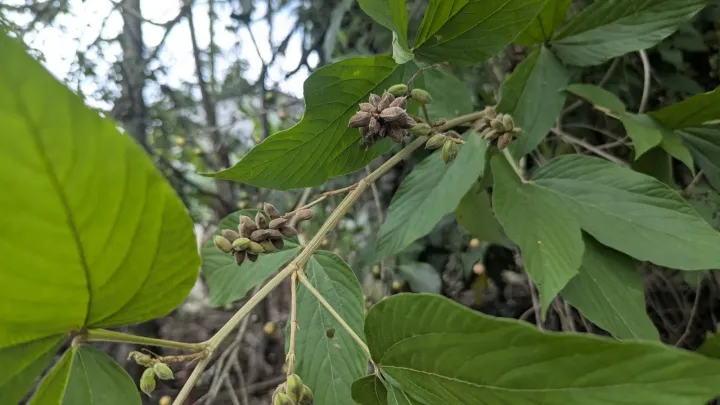
Description
Sowing dates
Flemingia macrophylla is a perennial shrub of the Fabaceae family. Sowing is typically conducted at the onset of the rainy season to ensure that young seedlings have adequate soil moisture for successful establishment.
It is recommended to scarify the seeds before sowing because they possess a hard seed coat that hinders germination. The optimal sowing depth is 1–2 centimeters in well-prepared, loose soil.
In large-scale agricultural systems, a nursery approach is often employed, where seedlings are raised in containers for 2–3 months before being transplanted to the field. This significantly improves the survival rate of the plants.
Planting density is determined by the intended purpose; for living fences or erosion control, a spacing of 50x50 centimeters is commonly practiced. For seed production plots, the spacing between rows can be increased.
The species exhibits slow initial growth, making weed management essential during the first months of development to prevent young plants from being choked by competing vegetation.
Growing requirements
This species thrives in tropical and subtropical climates, preferring regions with annual rainfall between 1500 and 3000 millimeters. It is highly sensitive to frost and cannot survive sub-zero temperatures.
Flemingia is relatively undemanding regarding soil types, capable of growing in poor, acidic, and slightly saline soils. However, peak productivity is achieved in well-drained loamy soils with a neutral pH.
The crop is highly shade-tolerant, making it an excellent candidate for agroforestry systems and intercropping within fruit orchards. It requires minimal fertilizer inputs due to its ability to fix atmospheric nitrogen.
A well-developed root system allows the plant to withstand short dry spells once established. Nevertheless, consistent soil moisture is crucial for maintaining high biomass production throughout the growing season.
The optimal temperature range for active metabolic processes is between 20 and 30 degrees Celsius. Soil temperatures exceeding critical levels may negatively impact the development of nitrogen-fixing root nodules.
Yield
Flemingia macrophylla is highly valued for its abundant biomass production, which is utilized as a source of high-quality organic fertilizer or mulch. The annual green manure yield can reach 10–15 tons per hectare under regular pruning.
The foliage is rich in nitrogen, effectively enhancing soil fertility in degraded lands. Frequent pruning encourages lateral branching and the continuous regeneration of fresh leaf canopy.
As a forage crop, it is used as a supplement in ruminant diets, though its inclusion rate is usually limited to 30 percent due to its tannin content. It serves as a reliable protein source during the dry season.
The plant demonstrates high seed productivity, facilitating its use in reforestation and the rapid establishment of ground cover on barren sites. A robust stand is typically established within the second year.
Yield metrics depend directly on the pruning frequency; under sustainable management, a stand can maintain high productivity for 10–15 years without needing to be replanted.
Main diseases and pests
Flemingia is generally a robust crop; however, young plants are susceptible to root rots in waterlogged soils. Poor drainage is the primary factor that leads to the mortality of established plantations.
Among pests, larvae of various Lepidoptera and beetle species can occasionally damage the tender foliage. In most scenarios, the damage remains localized and does not warrant chemical intervention.
Nematodes can infest the root system, particularly in light, sandy soils, which may reduce the plant's overall vigor. Implementing crop rotation and soil health management helps minimize these risks.
To prevent fungal outbreaks, adequate spacing must be maintained to ensure proper airflow within the canopy. Prompt removal and disposal of infected plant parts help slow down disease progression.
Pests rarely cause significant economic losses because the plant's high regenerative capacity allows it to quickly recover its leaf surface after minor damage occurs.
Harvesting
Harvesting the green biomass is performed through systematic pruning, starting 6–9 months after initial planting. The optimal cutting height is 50–70 centimeters above the ground level.
When used for mulching, the pruned branches and leaves are spread evenly across the soil surface between rows. This practice protects the soil from erosion and facilitates the gradual release of essential nutrients.
Seed collection is done manually once the pods turn dark brown and begin to split. Timely harvest is critical to prevent self-seeding and minimize crop losses.
After collection, the pods are dried in the shade, threshed, and cleaned of debris. Storing the seed material requires low-humidity conditions to maintain viability.
The pruning schedule is tailored to the specific needs of the farm: for maximum biomass yield, pruning is performed 2–4 times annually, depending on growth rates and local climatic conditions.