
Flemingia involucrata
Flemingia involucrata
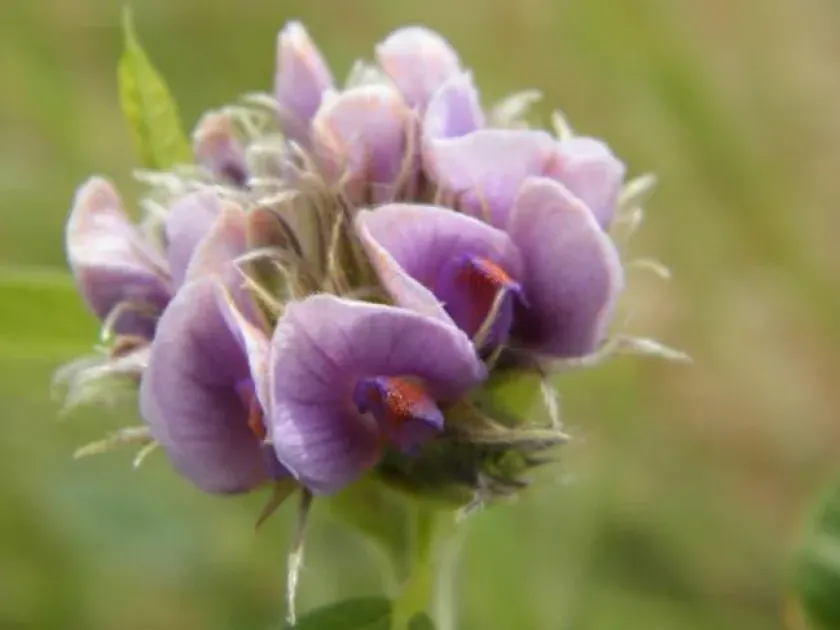
Description
Growing requirements
Flemingia involucrata is a perennial leguminous plant belonging to the Fabaceae family. Native to tropical regions, this species is widely recognized for its ecological importance and potential as a sustainable agricultural crop.
The plant thrives in well-drained, fertile soil types. It is particularly well-suited for tropical environments where soil structure needs improvement. It does not tolerate waterlogging, requiring soils with good drainage properties to prevent root damage.
Climatic requirements are centered around warm, humid conditions with consistent temperatures throughout the growing season. While Flemingia involucrata shows resilience to drought, optimal biomass production is achieved when moisture levels are sufficient.
Botanically, it is distinguished by its unique inflorescences, which are enclosed by protective bracts, giving it the specific epithet "involucrata." These structures help protect the flowers, ensuring consistent pollination even under challenging climate conditions.
As a legume, it maintains a symbiotic relationship with rhizobia bacteria. This biological nitrogen fixation process allows the plant to thrive in nutrient-poor soils and serves as a natural fertilizer source for surrounding crops in mixed planting systems.
Yield
The yield of Flemingia involucrata is primarily measured by its total biomass production, which is utilized for fodder or as organic green manure. The plant's ability to regenerate rapidly after cutting allows for multiple harvests per year.
In terms of forage quality, the leaves and stems provide a significant source of protein. This nutritional profile makes it an essential crop for livestock integration in tropical agroforestry systems.
Strategic harvesting cycles are necessary to maximize yield potential. By timing the cuts according to the plant's growth stage, farmers can balance between total dry matter volume and nutritional content to suit specific livestock requirements.
Crop productivity is further enhanced by the species' inherent robustness against common regional plant diseases. This resistance reduces the need for heavy pesticide usage, promoting sustainable farming practices.
Future agricultural applications may include the use of this species in large-scale cover cropping programs. By utilizing Flemingia involucrata to maintain ground cover, producers can minimize soil erosion while simultaneously building up soil organic matter levels.