
Flemingia lineata
Flemingia lineata
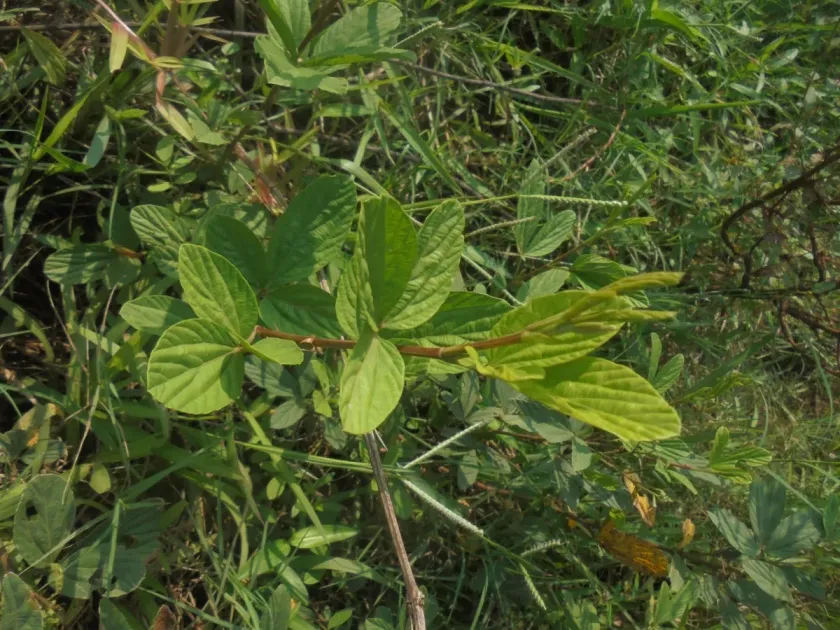
Description
Sowing dates
Flemingia lineata is a perennial tropical shrub, and its sowing time is strictly tied to the onset of the rainy season. In regions where it is cultivated, seeds are sown immediately after steady rains commence to ensure that seedlings have sufficient moisture to establish their root systems.
Pre-treatment of seeds before sowing significantly improves germination energy. It is recommended to perform scarification, as the hard seed coat can prevent uniform seedling emergence under field conditions.
The sowing depth typically ranges from 1 to 2 centimeters. Sowing too deep results in reduced germination rates, as the small seeds have limited energy reserves to push through the soil layer.
Planting density varies depending on the intended use. When establishing live fences or erosion control strips, a denser planting scheme is used, whereas for pasture components, the spacing between plants is increased.
The plant recovers well after pruning, so both direct seeding and transplanting prepared seedlings into prepared holes are practiced to accelerate establishment on degraded soils.
Growing requirements
Flemingia lineata belongs to the Fabaceae family and is valued for its high adaptability to poor soils. It can successfully thrive on acidic, eroded, and rocky substrates where other forage crops fail to show productivity.
The crop prefers a tropical climate with a distinct wet season but demonstrates remarkable resistance to short-term droughts. The optimal temperature range for active growth is between 22 and 30 degrees Celsius.
One of the key characteristics of the plant is its ability to perform effective nitrogen fixation in symbiosis with soil bacteria. This allows for the active use of Flemingia in agroforestry systems for the natural enrichment of the soil profile with nitrogen.
The plant does not tolerate prolonged waterlogging, so it is necessary to select sites with good drainage for cultivation. It performs well in open, sunny locations but is also capable of tolerating moderate shading under the canopy of other crops.
A crucial factor for success is the absence of competition from weeds during the early stages of growth. Young plants develop quite slowly, so regular weeding during the first months of life is vital for forming a healthy sward.
Yield
The yield of Flemingia lineata green matter depends on planting density and cutting frequency. With intensive plantation management, the plant is capable of providing several cuts per year, ensuring a stable volume of nutritious plant raw material.
This crop is often used as a source of mulch and "green manure" in the inter-rows of fruit trees. Regular branch pruning allows for the return of organic material rich in nitrogen to the soil, which directly impacts the fertility of the plot.
As a forage crop, the plant is valued as a protein supplement for the diet of ruminants. However, it is important to note that the leaves contain tannins, so feeding should be dosed to prevent a reduction in feed digestibility.
Maximum biomass yields are achieved when rainfall is optimal during the active growing season. In conditions of moisture deficit, the plant slows down its growth but retains its green mass, remaining a fallback source of feed for livestock.
To assess productivity, experts recommend weighing dry matter from control plots after each cutting cycle, which allows for adjustments to the plantation's usage schedule based on current farm needs.
Main diseases and pests
Flemingia lineata is characterized by high resistance to most typical agricultural pests. Due to the presence of specific metabolites in the leaves, the plant is rarely subject to massive infestations by insect phytophages.
Sometimes, leaf damage from various types of leaf-eating beetles may be observed, but it rarely poses a critical threat to the overall condition of the plantings. The use of chemical insecticides on this crop is generally unnecessary.
Fungal diseases, such as anthracnose or leaf spots, can appear in conditions of extremely high humidity and poor air circulation. In such cases, thinning the plantings to improve ventilation is recommended.
Root rots are the most dangerous threats in the event of standing water on the plot. Infestation by soil-borne pathogens leads to rapid wilting of the bush, so choosing a well-drained site is the best preventative measure.
Viral diseases are extremely rare and, as a rule, have no significant impact on the total yield of the plantation. An important preventive measure is the use of healthy seed material free from pathogens.
Harvesting
Harvesting or cutting of Flemingia lineata is primarily done manually or using light mechanized equipment. Given its bush-like growth habit, the most effective method is pruning at a height of 30–50 centimeters above ground level.
The timing of the harvest depends on the farm's focus: obtaining the maximum amount of protein-rich biomass or preparing organic mulch. In the first case, cutting is done before mass flowering, when the nutritional value of the leaves is at its peak.
If the goal is soil enrichment, pruning is performed as new shoots grow. The resulting biomass is left on the soil surface or incorporated into the top layer, where it decomposes quickly, releasing nitrogen and other macronutrients for the main crop.
When harvesting seeds, wait for the pods to turn brown, but perform the collection promptly, as ripe pods have a tendency to shatter spontaneously, leading to significant field losses.
After collection, the seed material must be cleaned of impurities and thoroughly dried in the shade. Storage of seeds is carried out in dry, cool, and well-ventilated rooms to maintain their viability until the next sowing season.