
Flemingia chappar
Flemingia chappar
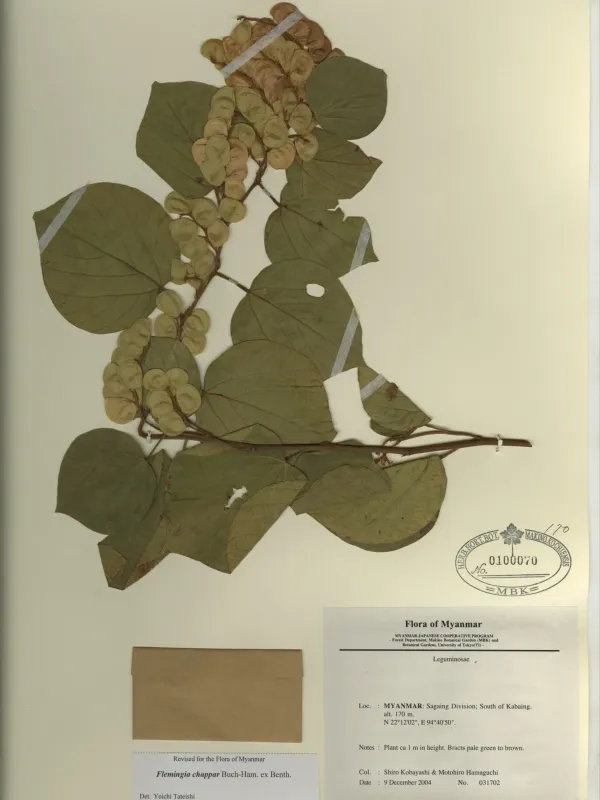
Description
Sowing dates
Flemingia chappar is propagated primarily through seeds, which require specific preparation to ensure high germination rates in tropical agricultural systems.
The optimal planting time coincides with the start of the rainy season, providing the necessary moisture for the rapid establishment of seedlings.
Seed scarification is highly recommended prior to sowing because the seed coat is naturally hard and requires physical treatment to allow water absorption.
The planting pattern should account for the shrub-like growth habit, typically requiring wide spacing to prevent excessive competition between mature plants.
Controlling weeds during the early establishment phase is critical, as young plants are susceptible to suppression by vigorous opportunistic vegetation.
Growing requirements
As a member of the Fabaceae family, Flemingia chappar is a hardy perennial shrub well-suited to the climatic conditions of its native tropical range.
The plant thrives in well-drained soils and exhibits remarkable tolerance to nutrient-poor substrates, partially due to its effective nitrogen-fixing symbiosis.
Sunlight exposure is a significant factor for success; although it can tolerate partial shade, maximum biomass production is achieved in full sunlight.
The species prefers stable temperatures typical of its native environment and does not handle severe frost or long, extreme dry seasons without stress.
Regular pruning is an essential management practice that encourages a denser canopy and prevents the plant from becoming too woody, thereby increasing leaf production.
Yield
The biomass yield of Flemingia chappar is determined by the frequency of pruning, which stimulates the growth of new, protein-rich shoots throughout the year.
In managed agricultural settings, the plant serves as a high-quality fodder source, providing essential nutrients for livestock in systems where traditional grasses may fail.
Beyond fodder, the crop is highly valued for its ability to produce significant amounts of organic mulch, which improves the structure of local soils.
Long-term productivity remains high if the plants are given adequate recovery time between successive harvests to replenish their root energy reserves.
Yield stability is generally excellent in established stands, as the deep root system provides resilience against short-term climatic fluctuations.
Main diseases and pests
Fungal diseases affecting the leaves and stems are the most common threats, particularly in high-humidity areas with poor air circulation within the stand.
Various insect pests, including aphids and foliage feeders, can cause damage to tender new growth, potentially reducing overall plant health.
Root rot becomes a major issue if the soil remains waterlogged, which can occur in low-lying areas that lack proper drainage infrastructure.
Invasive climbers or aggressive weeds can smother individual shrubs if the plantation is not monitored and cleared regularly.
Preventative measures, such as maintaining optimal plant density and removing symptomatic plant parts, are key to managing health risks effectively.
Harvesting
The harvest method involves pruning the foliage, which is often performed manually using sickles or mechanically in more industrialized settings.
The best quality fodder is obtained by harvesting before the plants enter the flowering phase, ensuring the highest protein-to-fiber ratio in the leaves.
For seed collection, harvesting must be timed with precision when the pods reach maturity but before they begin to dehisce and drop seeds.
Post-harvest management should include efficient drying or processing to preserve the nutritional value of the foliage before it is utilized as feed.
The height of the cut is crucial for survival; leaving a sufficient stump allows the shrub to regenerate quickly for future harvest cycles.