
Hybrid meadowsweet
Filipendula hybrids
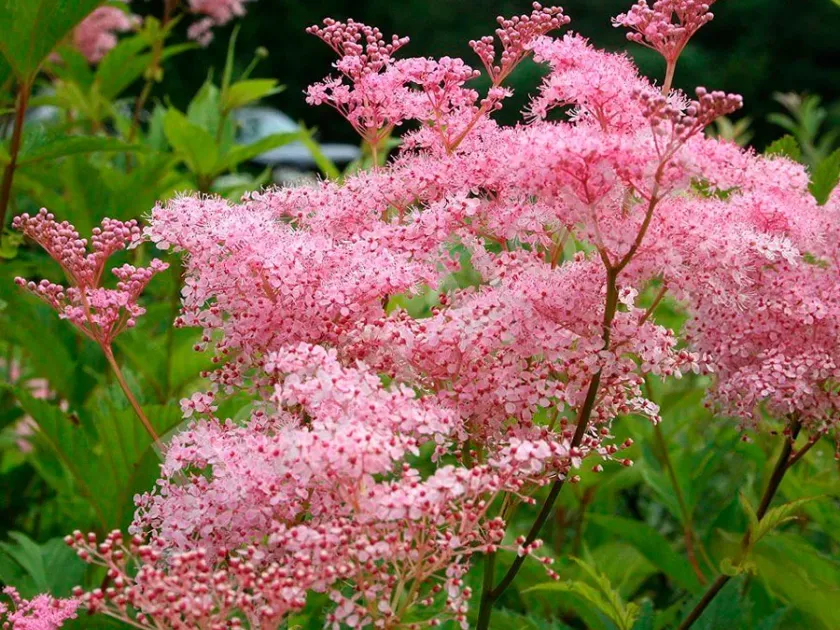
Description
Sowing dates
The seeds of hybrid meadowsweet are best sown in late autumn directly into open ground or in containers during February for early spring germination. Seeds require a mandatory cold stratification period of 1 to 2 months at low temperatures to ensure successful dormancy breaking.
When sowing in containers, keep the substrate moist and maintain a stable temperature of 18–20 degrees Celsius. Once the seedlings develop two true leaves, they should be carefully pricked out into individual pots to provide sufficient room for healthy root system development.
Vegetative propagation by division is the preferred method for maintaining the desired characteristics of hybrid cultivars. The process is performed in early spring or autumn, carefully separating the rhizome into several portions, each possessing active growth buds.
Planting divisions into prepared holes should be done at a depth of approximately 15 centimeters. It is crucial to ensure the buds are pointed upwards, followed by immediate watering to settle the soil around the roots and prevent air pockets that could hinder growth.
New plantings should be mulched with organic matter, such as compost or wood chips, to retain soil moisture and suppress weed competition. This initial care phase is vital for the plant to establish itself before the onset of the hot summer season.
Growing requirements
Hybrid meadowsweet belongs to the Rosaceae family and is highly valued for its striking inflorescences and structural foliage. The plant thrives in temperate climates, showing significant resilience to cold winters and moderate summer temperatures.
The ideal growing medium for this perennial is a nutrient-rich, moist, loamy soil with a neutral or slightly acidic pH. Meadowsweet is known as a moisture-loving plant, meaning it will perform poorly in dry or sandy soils that do not hold water efficiently.
While the plant can tolerate partial shade, it flourishes best in sunny locations provided that soil moisture is kept constant. Under full sun, the plant requires more frequent irrigation, especially during dry spells, to prevent leaf scorch and ensure lush blooming.
Fertilization should be handled carefully; applying a balanced slow-release fertilizer in early spring promotes strong foliage growth. Supplementing with phosphorus-rich nutrients before the flower buds open will significantly enhance the duration and intensity of the bloom.
Good air circulation is essential for the health of hybrid meadowsweet to prevent fungal issues. Planting in groups should allow for enough space between individual plants, and regular removal of spent flowers will keep the garden looking neat and prevent unwanted self-seeding.
Main diseases and pests
Powdery mildew is the most common fungal disease affecting meadowsweet, particularly during humid weather with poor air movement. Applying fungicides or maintaining proper spacing can significantly reduce the risk and severity of such infections.
Rust can manifest as brownish spots on the undersides of leaves, which, if left unchecked, may cause early senescence of the foliage. Removing and destroying affected plant material is an essential practice to maintain the plant's health throughout the season.
Aphids tend to colonize the tender tips of new shoots, sucking the sap and causing stunted growth. Simple measures such as high-pressure water sprays or the application of insecticidal soap are usually enough to control small infestations without harming the environment.
Leaf beetles are occasional pests that can leave irregular holes in the foliage, reducing the overall aesthetic quality of the plant. Monitoring and picking off larvae by hand is often sufficient for small gardens, while biological agents can be used for larger plantings.
Root nematodes can cause the plant to weaken and lose its vigor, as they damage the roots and impede nutrient uptake. To prevent this, rotate planting sites every few years and ensure that the soil remains aerated and rich in organic matter to foster beneficial microbes.