
Zabel's sea holly
Eryngium x zabelii Christ ex Bergmans
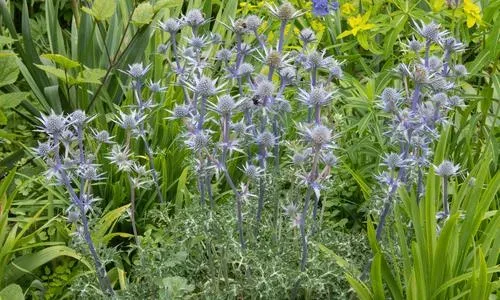
Description
Growing requirements
Zabel's sea holly (Eryngium x zabelii) is a striking herbaceous perennial belonging to the Apiaceae family. It is a garden hybrid, celebrated for its architectural form, steely-blue stems, and intricate, prickly flower heads that offer long-lasting aesthetic appeal.
This species requires full sun to thrive and develop its characteristic vibrant blue coloration. Planting in shaded environments is strongly discouraged, as it leads to weak stems that lose their posture and a significant reduction in the intensity of the blue pigment.
The plant demands well-drained, fertile to average garden soil. It is particularly sensitive to winter wetness, which can cause the root crown to rot. Adding grit or sand to the soil profile is recommended if the local drainage is naturally poor or clay-based.
Drought tolerance is a key feature of this crop once established. It is highly suitable for xeriscaping or low-water gardens, as its deep root system allows it to access water reserves during mid-summer heatwaves without needing frequent irrigation.
Maintenance involves minimal intervention. Aside from cutting back dead foliage in early spring, the plant is relatively self-sufficient. Avoid excessive fertilization, as high-nutrient soils often result in floppy growth rather than the strong, upright habit desired in landscape design.
Main diseases and pests
Root rot is the most common threat, especially in soils that do not provide adequate drainage. It is usually caused by excessive moisture levels during the dormant season, leading to the rapid decay of the plant's structural root system.
Powdery mildew can occur if there is insufficient air circulation around the plants. This fungal infection creates a white, dusty film on the leaves, which can reduce the vigor of the plant if left unchecked for an extended period.
Aphids are frequent pests that congregate on the developing flower stems. These sap-sucking insects can stunt growth and should be managed early through physical removal or the application of appropriate biological control agents.
Slugs and snails may attack young shoots in the spring, potentially causing significant damage to new growth. Using mulches such as gravel can act as a natural deterrent, protecting the crown from these garden pests.
To ensure plant health, it is essential to monitor for leaf spot diseases, especially in climates with high humidity. Proper spacing during initial planting remains the most effective long-term preventative measure against these foliage-damaging pathogens.