
Giant sea holly
Eryngium giganteum M. Bieb.
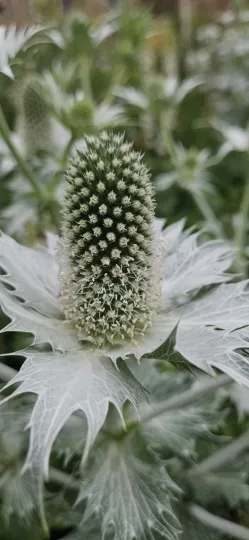
Description
Sowing dates
Giant sea holly is a monocarpic perennial that is typically propagated from seed. Sowing the seeds in late autumn is the most effective method, as they require a period of cold stratification to break dormancy and ensure uniform germination in the spring.
If you prefer spring sowing, it is essential to stratify the seeds in a refrigerator for at least 6 to 8 weeks. Without this cold treatment, the germination rate will be significantly reduced, leading to sparse and uneven seedling emergence.
When starting indoors, use a well-draining seed-starting mix in pots. Keep the soil moist but not waterlogged, as excess moisture can promote fungal growth. Ensure the pots are kept in a cool, bright location until the seeds start to sprout.
The plant develops a deep taproot, making it highly sensitive to disturbance. It is crucial to transplant seedlings into the garden while they are still small, ensuring the root ball remains completely intact to prevent transplant shock.
Direct seeding in the garden should be done in prepared, weed-free soil. Space the plants at least 15 inches apart to allow for proper airflow, as adequate spacing is vital for the health and development of the mature rosettes.
Growing requirements
Native to the Caucasus, Eryngium giganteum thrives in environments that mimic its natural mountainous habitat. It requires full sun to develop its characteristic silvery-blue foliage and architectural flower heads that are highly valued in landscape design.
The plant is not overly demanding regarding soil fertility, but it is extremely particular about drainage. It performs best in poor, sandy, or gravelly soils where water can move away from the crown quickly during the winter months.
Once established, giant sea holly is highly drought-tolerant. Supplemental watering is generally only necessary during prolonged dry spells in the first year of growth. Overwatering is the most common cause of failure in this species.
Fertilizers should be used sparingly, if at all. High nitrogen levels stimulate excessive vegetative growth, which makes the stems weak and prone to flopping. A lean soil composition is preferred to maintain the plant's structural integrity.
The plant is relatively hardy and can withstand cold winters if the soil is well-drained. In regions with extremely wet winters, providing a layer of grit around the base can help keep the crown dry and prevent decay.
Main diseases and pests
Root rot is the most serious threat to giant sea holly, especially in heavy or poorly drained soils. Improving soil porosity and ensuring that the garden bed is elevated can help prevent this lethal condition from occurring.
Powdery mildew may appear on the foliage during periods of high humidity and poor air circulation. To manage this, ensure plants are spaced adequately and avoid overhead watering that keeps the leaves damp for extended periods.
Aphids can sometimes infest the flower stems, drawing sap and causing minor disfigurement. These pests can typically be controlled with a mild insecticidal soap or by physically removing them with a strong jet of water.
Slugs and snails can be problematic for young seedlings. Using slug pellets or physical barriers like crushed shells can prevent these gastropods from consuming the tender foliage before the plant has had a chance to mature.
Regular sanitation of the garden bed is recommended to minimize disease pressure. Removing dead foliage and clearing debris around the base of the plant in late autumn helps maintain a healthy environment for the next growing season.