
Eryngium pandanifolium
Eryngium pandanifolium Cham. & Schltdl.
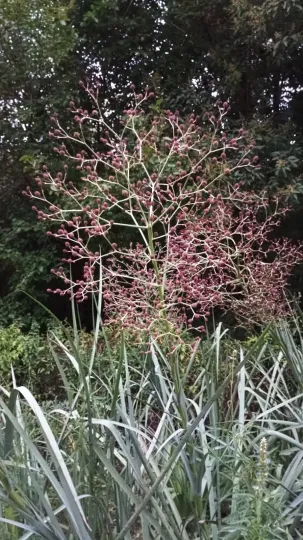
Description
Sowing dates
Sowing Eryngium pandanifolium seeds is most effective when done in autumn or early spring, provided the seeds undergo a period of cold stratification. This natural or artificial process helps break dormancy and promotes uniform germination.
For nursery production, seeds are sown in trays using a well-draining, peat-free substrate. Maintaining a consistent temperature of around 18-20 degrees Celsius is crucial during the initial stages of development.
Seeds should be covered only very lightly with soil or grit, as they often require exposure to indirect light to trigger the sprouting process. Consistent moisture must be maintained without causing the substrate to become waterlogged.
Seedlings are typically pricked out into individual deep pots as soon as they have developed their first true leaves. Deep pots are essential due to the plant's tendency to develop a strong, elongated taproot system early on.
Hardening off the plants before permanent transplantation is vital for their long-term survival. This gradual acclimation period allows the young plants to adjust to outdoor conditions and reduces transplant shock.
Growing requirements
Eryngium pandanifolium, a member of the Apiaceae family, is an architectural perennial native to South America, particularly Argentina and Brazil. It is highly valued for its striking, long, serrated, sword-like foliage.
This species thrives in full sun and requires fertile, well-draining soil. While it is naturally found in damp grasslands, it requires a well-structured soil profile to prevent winter rot, which is its greatest weakness.
The climate requirements include a frost-free environment during the growing season. In cooler regions, the plant requires significant protection during winter, as it is only semi-hardy and can be damaged by prolonged sub-zero temperatures.
Good agricultural practice involves providing consistent moisture during the summer months, especially while the flower spikes are developing. Despite its tropical origin, the plant can handle moderate dry spells once established.
Maintenance includes light pruning of dead foliage in early spring to encourage vigorous new growth. The plant benefits from annual applications of balanced fertilizer in the spring to support its rapid development of large leaves.
Main diseases and pests
Root rot is the most significant threat to this plant, often caused by heavy, waterlogged soil during winter dormancy. Ensuring excellent drainage is the most effective preventative measure against this deadly condition.
Aphids can be a common pest, particularly on the succulent young flower stalks during early summer. Regular inspections and the application of horticultural soaps or systemic insecticides can manage these populations effectively.
Powdery mildew may occur if plants are spaced too closely or if there is poor airflow. Maintaining proper plant spacing and ensuring good air circulation around the crown helps keep foliage healthy and disease-free.
Slugs and snails can cause damage to the tender new growth during wet weather. Using organic slug barriers or gravel mulching around the base of the plant can significantly deter these persistent pests.
Monitoring for signs of fungal spots on leaves is essential in humid climates. If detected, remove the affected foliage immediately and apply a suitable fungicide to prevent the spread to healthy parts of the plant.
Harvesting
The primary use for Eryngium pandanifolium is as an ornamental structural plant in landscape design. Its height and sword-like leaves make it an excellent choice for modern gardens and as a dramatic focal point.
Harvesting for floral design involves cutting the tall, architectural inflorescence spikes when they are fully developed. These spikes are prized in the floral industry for their durability and distinctive, long-lasting appearance.
To dry the flower heads for interior arrangements, cut them before they turn brown and hang them upside down in a cool, dark, and well-ventilated area. This preserves their structural integrity and unique color for months.
Clean-up operations in the late winter or early spring are necessary to remove old, decaying leaves. Keeping the crown of the plant clean and dry is essential to preventing fungal infections in the early spring thaw.
Seed collection is performed once the flower heads have fully dried on the stem. Collect the seeds, remove excess debris, and store them in a cool, dry place to maintain viability for the next planting season.