
Eryngium carlinae
Eryngium carlinae F. Delaroche
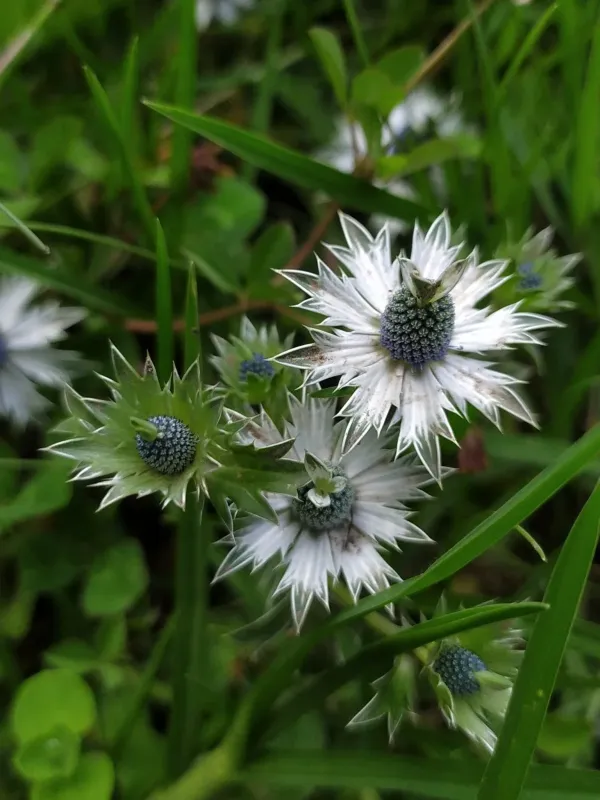
Description
Sowing dates
Eryngium carlinae is a distinct perennial species belonging to the Apiaceae family. It is recognized for its unique rosette-forming habit and resilient nature, making it a subject of interest in specialized agricultural production.
Sowing should ideally occur in early spring after the risk of frost has passed. Seeds often require cold stratification to break dormancy and ensure uniform germination across the field, which is a critical step in professional production.
The seeds are typically sown at a shallow depth to ensure they receive sufficient light for emergence. Optimal spacing is crucial to prevent competition, as the plant develops a wide base that requires room to expand.
For large-scale cultivation, direct drilling into well-prepared seedbeds is preferred. The soil must be fine-textured to allow for the relatively delicate root system of the seedlings to establish properly during the first few weeks.
Management of young crops involves careful weed control. As the plant is slow-growing in its initial stages, mechanized weeding between rows helps maintain the health and vigor of the young Eryngium plants.
Growing requirements
The cultivation of Eryngium carlinae requires well-drained, sandy or loamy soils with a neutral pH level. Drainage is the most important factor, as the species is highly susceptible to root damage in waterlogged conditions.
Full sun is essential for the development of the plant's structural integrity. Exposure to direct sunlight ensures that the plant retains its characteristic form and promotes the production of secondary metabolites for which it is often cultivated.
While the plant exhibits significant drought tolerance once established, consistent moisture during the active vegetative growth phase will result in higher biomass production. Excess irrigation should be strictly avoided.
Fertilization regimes should focus on balanced NPK ratios with a slight emphasis on phosphorus to support root development. Over-fertilization with nitrogen can lead to succulent growth that is more prone to environmental stress.
The climate requirements for this species include temperate conditions with well-defined seasonal changes. It is adapted to areas where it can complete its full life cycle without excessive heat or prolonged frost exposure.
Main diseases and pests
Fungal pathogens represent the primary threat to the crop, particularly in environments with high relative humidity. Root rot caused by Pythium or Phytophthora species can decimated young stands if drainage is inadequate.
Pests such as aphids and spider mites can infest the foliage, particularly during dry spells. Monitoring programs should be implemented to identify these pests early and apply appropriate control measures if thresholds are exceeded.
Good field hygiene is the best defense against threats. Removing debris and maintaining proper plant spacing ensures adequate airflow, which significantly reduces the risk of foliar fungal infections like powdery mildew.
In addition to pests and diseases, competition from invasive weeds poses a significant threat to yields. Regular cultivation and integrated weed management are essential for sustaining a healthy population of the crop.
Agronomic scouting remains the most reliable method for managing biological threats. Regular assessment of plant health ensures that any emerging issues are addressed before they impact the entire production area.