
Erman's birch
Betula ermanii Cham.
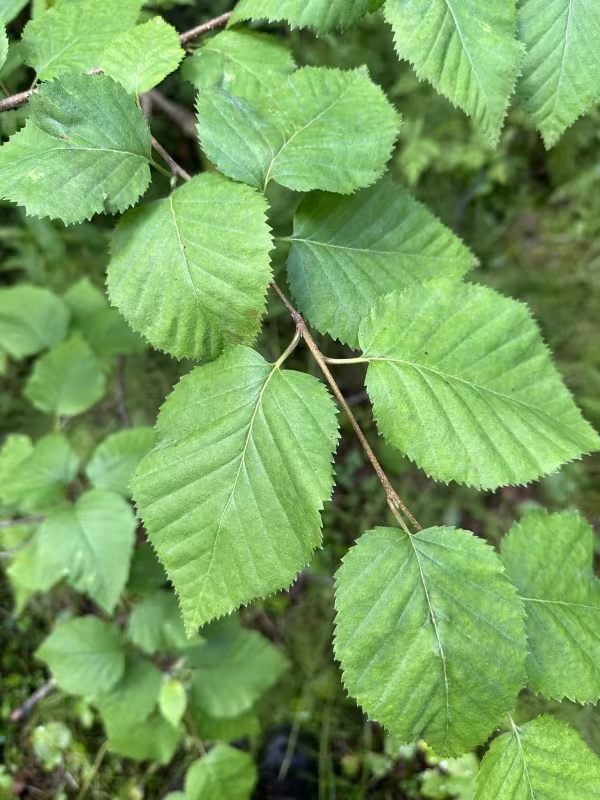
Description
Growing requirements
Erman's birch, commonly referred to as the stone birch, is a member of the Betulaceae family. It is highly valued for its exceptional structural timber and its ability to thrive in harsh, subalpine environmental conditions.
The native habitat includes the Far East, Japan, and parts of the Korean Peninsula. In nature, this tree is often found at high altitudes, forming stable forest stands on rocky, skeletal soils where competition from other fast-growing species is limited.
For cultivation, the species requires well-drained, porous soils. It is highly intolerant of waterlogged areas, as its root system is sensitive to low oxygen levels in the substrate, which is a critical consideration for site selection.
Regarding climate, the tree is remarkably hardy and resistant to freezing temperatures. It performs best in regions with cool summers and sufficient atmospheric humidity, which prevents the leaf desiccation often seen in extreme heat.
Agrotechnical management includes proper spacing to ensure adequate light penetration. As a light-demanding species, Erman's birch requires an open site to achieve its typical growth rate and to develop a healthy, dense crown structure.
Main diseases and pests
The primary threats to this species include fungal leaf spots and various wood-decaying fungi. These pathogens typically attack trees that have been weakened by environmental stressors or improper planting techniques.
Pest pressure often comes from leaf-mining beetles and aphids. While these pests rarely kill an established, mature tree, they can severely impact the aesthetic value of younger specimens in landscape settings.
Stem borers pose a localized threat in urban or managed forest environments. They target the vascular system of the tree, potentially leading to branch dieback and an overall decrease in the tree's vigor over several seasons.
Effective management includes maintaining tree health through appropriate irrigation during drought and preventing mechanical injuries to the bark. A healthy tree is significantly more resistant to both biotic and abiotic attacks.
Integrated pest management protocols, including the removal of deadwood and the use of targeted biological controls, are recommended for maintaining plantations. Proper hygiene minimizes the need for heavy chemical intervention.