
Yellow birch
Betula alleghaniensis Britton
Description
Growing requirements
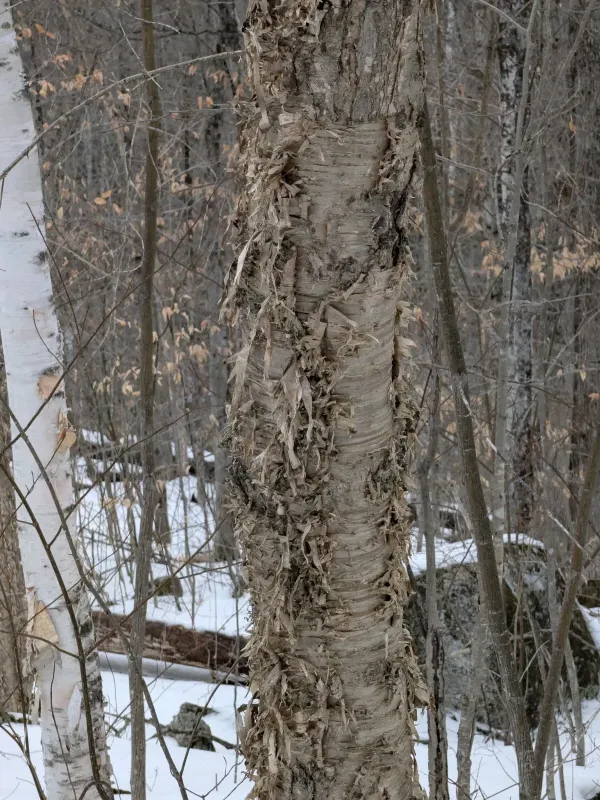
Betula alleghaniensis, commonly known as the yellow birch, belongs to the Betulaceae family. It is a large deciduous tree prized for its golden-bronze, peeling bark and its ecological significance in North American forests.
The species is native to eastern North America, spanning from the Atlantic coast to the Great Lakes region. It thrives in cool, moist climates and is typically found in mature forest stands, often growing on mossy logs or elevated forest floors.
Cultivation requires deep, fertile, and well-drained soils with a slightly acidic pH. While the tree tolerates a range of moisture levels, it performs best in soils rich in organic matter that maintain constant humidity without waterlogging.
Botanically, it is characterized by its moderate growth rate and a shallow root system. The tree produces catkins in the spring and small winged seeds, which are dispersed efficiently by the wind across suitable forest gaps.
The tree exhibits intermediate shade tolerance. Seedlings can survive under a dense canopy for a period, but vigorous growth and straight stem development require adequate exposure to sunlight once the tree reaches the sub-canopy layer.
Yield
The primary economic use of Betula alleghaniensis is for high-quality hardwood lumber. Its wood is dense, strong, and possesses an attractive grain, making it highly desirable for fine furniture, flooring, and cabinetry.
In forest management, yield is maximized by selecting sites with optimal moisture levels and conducting thinning operations. This ensures that the remaining trees grow with minimal competition, leading to higher timber quality.
The wood is also widely used in the production of high-grade plywood and veneers. Due to its superior finishing qualities, it is frequently utilized in the creation of high-end millwork and musical instruments.
Beyond timber, the species contributes significantly to forest ecosystem services. It helps in nutrient cycling, as its leaf litter is easily decomposed, enriching the soil with essential minerals needed by other plant species.
The species is also valued for its long-term carbon sequestration potential. Mature stands serve as significant carbon sinks, playing an important role in climate regulation within managed forest landscapes.
Main diseases and pests
The main threats to this culture include fungal infections such as trunk rot and bark cankers, which often develop following physical damage or periods of environmental stress. Good hygiene in forest management is essential.
Insects like the bronze birch borer and various leaf-feeding caterpillars can impact tree health. Monitoring populations and maintaining healthy, diverse stands are the most effective strategies for preventing major outbreaks.
Browsing by white-tailed deer presents a significant challenge for forest regeneration. In areas with high deer populations, protective fencing or tree shelters are necessary to ensure the survival of young birch saplings.
Climate change, particularly the increased frequency of severe summer droughts, poses a risk to forest health. Drought-stressed trees are more susceptible to secondary pests and pathogens, necessitating adaptive management.
Effective mitigation involves fostering diverse species composition. Mixed stands provide natural checks on pest populations and increase the overall resilience of the forest ecosystem against biological and environmental stressors.