
Bog birch
Betula pumila L.
Description
Growing requirements
The bog birch (Betula pumila L.) is a deciduous shrub species belonging to the Betulaceae family. Unlike its towering relatives, this species typically grows as a dense, low-spreading shrub, often reaching heights of only one to two meters in its native habitat.
The species is primarily native to the northern regions of North America. It is naturally found in cold, acidic, and wetland environments such as bogs, swamps, and along the edges of ponds, where it has evolved to thrive in soils that are saturated for most of the growing season.
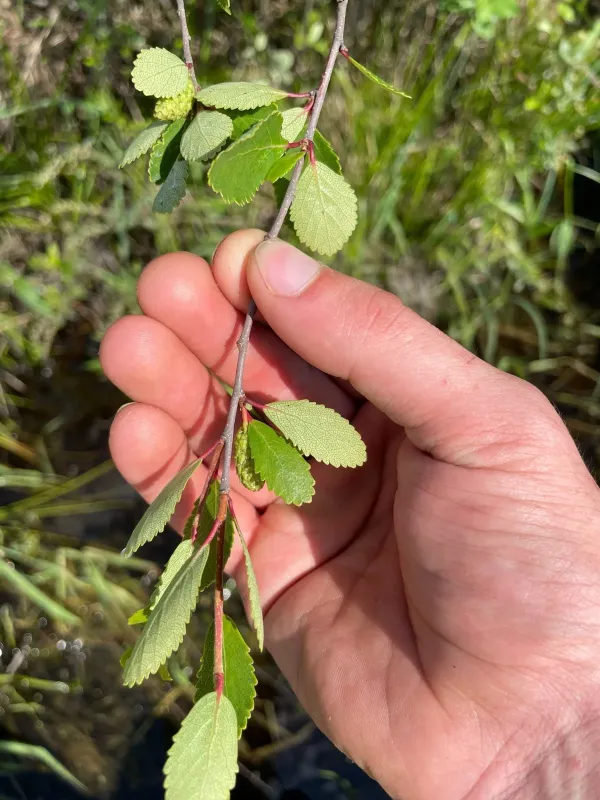
Botanically, the bog birch is characterized by its small, alternate, leathery leaves with coarse, irregular serrations. The young twigs are often covered in fine, glandular, waxy dots, while the bark color ranges from reddish-brown on new growth to a grayish, papery texture on older stems.
Cultivation requirements are strict regarding moisture; the plant demands consistently damp to wet soil conditions. It prefers acidic substrates rich in organic matter. While it is tolerant of low-nutrient soils, it requires full sun exposure to maintain its compact habit and vibrant foliage health.
The primary horticultural use of this species is in landscape design, specifically for moisture-heavy garden zones. It is an excellent choice for ecological restoration, rain gardens, and as a naturalistic element in landscaping near water features where other traditional shrubs might struggle.
Main diseases and pests
Bog birch is generally hardy and resilient; however, it can be susceptible to various fungal pathogens if the air circulation is poor. Leaf rust and powdery mildew are the most common concerns in stagnant, humid environments where the canopy remains wet for extended periods.
In terms of pests, the shrub may be subject to infestations by leaf-miners, aphids, and caterpillars that feed on the succulent new growth. Routine monitoring throughout the late spring and early summer is recommended to catch potential outbreaks before they impact the shrub's aesthetic value.
Care should be taken to avoid soil compaction around the root zone, as the shallow root system requires good oxygen exchange. Using organic mulch, such as peat moss or pine needles, helps to maintain the soil acidity and moisture levels that the plant requires to remain vigorous.
Regarding winter threats, this species is extremely frost-tolerant, being native to cold, northern climates. It does not require any additional protection, such as burlap wrapping or heavy mulching, even in areas that experience severe sub-zero temperatures throughout the winter season.
For optimal health, conduct light pruning in late winter or early spring to remove dead or diseased branches. This simple practice ensures the plant remains well-ventilated, reducing the risk of opportunistic fungal infections and promoting healthy growth cycles for the coming year.