
Silver birch
Betula pendula Roth subsp. Pendula
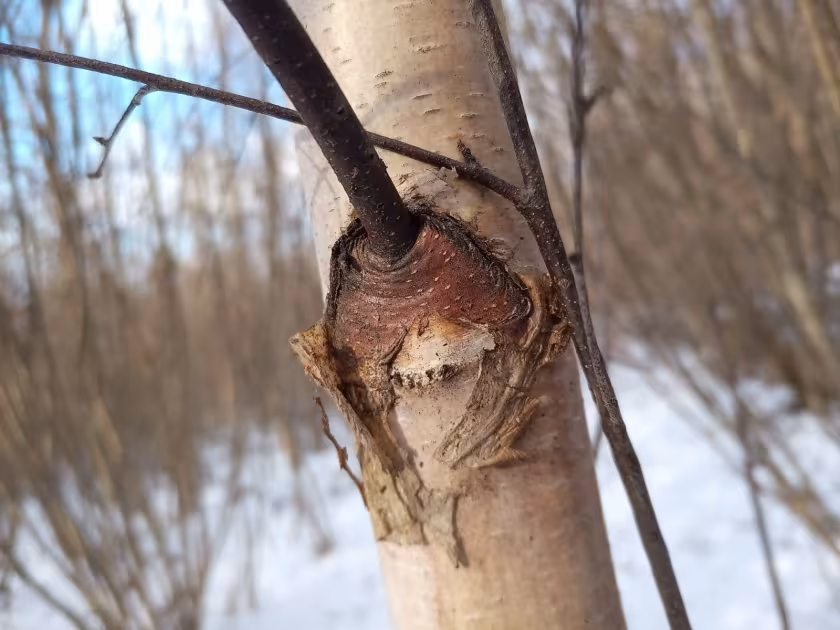
Description
Sowing dates
Silver birch seeds should ideally be sown in the autumn immediately after collection or in the spring following cold stratification. Autumn sowing allows the seeds to overcome dormancy naturally within the soil environment, often leading to more robust germination success.
For spring sowing, seeds require stratification at temperatures between 0 and 5 degrees Celsius for approximately 60 days. This essential process simulates winter conditions, ensuring that the embryo is fully prepared for emergence when the soil warms up.
The seeds are extremely small and contain very little nutrient reserves; therefore, they should be sown at a shallow depth of no more than 0.5–1 cm. Covering the sown area with a thin layer of peat or fine sand helps maintain consistent moisture levels during the germination phase.
Sowing in beds or nursery rows with 25–30 cm spacing between rows provides sufficient airflow and space for seedling development. Adequate and frequent misting is required during the first weeks after germination to prevent the delicate seedlings from drying out.
Thinning is a mandatory practice once the seedlings reach a height of a few centimeters to reduce competition for nutrients and light. A well-managed density ensures that the young birch trees develop straight trunks and healthy root systems.
Growing requirements
Silver birch, belonging to the Betulaceae family, is a pioneer species that thrives in full sunlight. It is intolerant of shade, and even minor canopy cover can significantly stunt its growth and reduce the biomass accumulation necessary for forestry.
The species is highly adaptable to various soil types, preferring well-drained sandy or loamy soils. It is frequently utilized in reforestation projects because it can establish itself on poor or degraded lands where other tree species struggle to survive.
As a frost-hardy species, it is well-suited for temperate and northern climates, demonstrating resilience against extreme cold. However, young plantations are vulnerable to prolonged drought and require careful moisture management until they establish deeper root systems.
An optimal soil pH for Silver birch ranges between 5.0 and 7.5. While it prefers moist environments, it does not tolerate long-term waterlogging; therefore, effective land drainage is critical in areas prone to seasonal flooding or high water tables.
Beyond wood production, the species has significant ecological value. It is widely used for soil erosion control, windbreaks in agricultural fields, and as a raw material for the pharmaceutical and cosmetic industries due to its medicinal properties.
Main diseases and pests
The most significant fungal threats include the birch polypore (Fomitopsis betulina), which typically attacks stressed or older trees. Maintaining good forest hygiene, including the prompt removal of infected wood, is essential for disease control.
Pests such as the birch leaf miner and various species of leaf beetles can cause substantial defoliation, especially in dense, monoculture plantations. Regular monitoring during the growing season allows for early detection and targeted management of pest outbreaks.
Poor site management, such as overcrowding, creates an environment favorable for powdery mildew and other fungal pathogens. Proper spacing and thinning encourage better ventilation, which lowers the humidity levels around the foliage and reduces the risk of infection.
Mechanical damage caused by heavy snow, ice storms, or strong winds can expose the tree to wood-rotting organisms. Sanitizing wounds or pruning damaged branches immediately after such weather events helps the tree heal and prevents long-term health decline.
Integrating biological control methods and selecting resilient provenances are key strategies in modern forest management. Avoiding dense plantings and ensuring sufficient nutrient supply can help strengthen the tree's natural defense mechanisms against insect attacks.
Harvesting
Industrial timber harvest is typically scheduled when the trees reach 50–60 years of age, depending on the desired dimensions and use of the wood. Thinning operations are carried out much earlier to manage stand structure and select the best specimens.
Birch sap collection is a traditional and highly seasonal harvest activity occurring in early spring before leaf emergence. It requires precise tapping techniques to ensure that the health of the tree is maintained and that the impact of the wounding is minimized.
For medicinal purposes, leaves and buds are harvested during the period of active growth. The harvested material must be dried in a cool, well-ventilated, and shaded environment to preserve the volatile oils and biologically active compounds found in the tissue.
Efficient harvesting involves modern logging equipment that optimizes timber quality while minimizing damage to the surrounding ecosystem. After felling, logs should be transported to processing facilities promptly to prevent discoloration or fungal spoilage of the sapwood.
Post-harvest management involves clearing the site of logging residues to prepare the soil for the next rotation. Sustainable forest management practices ensure that the site remains productive for subsequent generations of birch or other timber crops.