
Eriospermum burchellii
Eriospermum burchellii
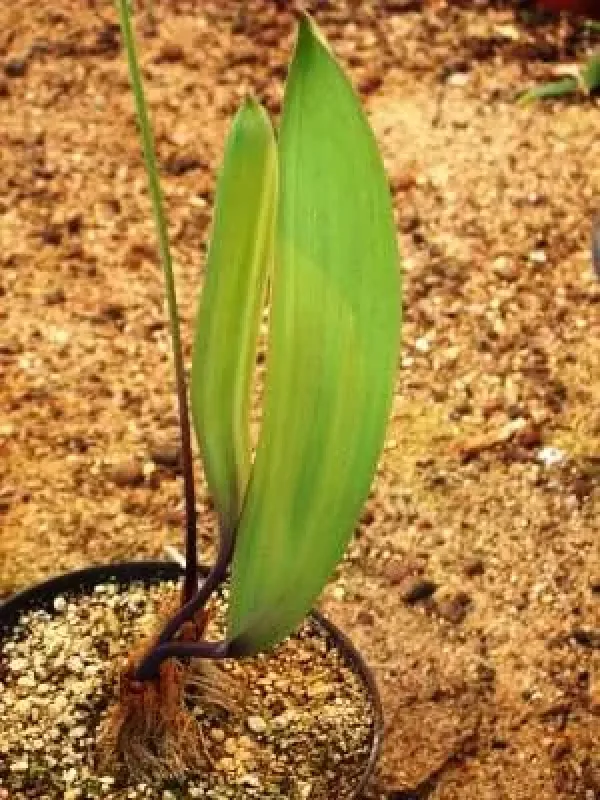
Description
Growing requirements
Eriospermum burchellii belongs to the Asparagaceae family and is a specialized geophytic plant native to the arid regions of Southern Africa. It is highly valued by botanists and succulent enthusiasts for its distinctive tuberous growth habit.
The plant grows from a singular, often dormant-sensitive tuber. During the growing season, it produces a single, morphologically diverse leaf that is uniquely adapted to capture moisture and sunlight in harsh desert environments.
Agronomic success depends heavily on a highly porous and inorganic substrate. A mixture of pumice, coarse sand, and a small amount of peat or loam is recommended to ensure rapid drainage and prevent root asphyxiation.
Environmental conditions must mimic the cycle of the plant’s natural habitat. This includes a bright, warm period for foliage development and a cool, dry dormant phase where the plant requires almost no moisture to survive.
Commercial utilization of this plant is minimal, restricted to specialty nurseries that supply the private collector market. It is not considered an agricultural crop but is a significant botanical curiosity within the succulent and xerophytic gardening sector.
Main diseases and pests
Root and tuber rot remains the most critical threat to Eriospermum burchellii. Over-watering, especially during the dormant season, leads to rapid breakdown of the tuber tissues by various soil-borne pathogens and fungi.
Mealybugs are the primary pest concern for this species. These insects thrive in the sheltered crevices of the leaf base and on the surface of the tuber, often remaining undetected until the plant shows signs of significant stress.
Spider mites can become a nuisance if the plant is kept in an environment with poor airflow and excessively low humidity. Their presence can lead to stippling on the leaves and a general decline in the plant's health.
Mechanical damage during repotting is a major gateway for infections. Any physical injury to the tuber should be allowed to callus over completely in a dry, shaded area before being replanted into the soil medium.
Poor ventilation promotes the development of various mold species on the soil surface, which can quickly spread to the plant's base. Consistent air movement is necessary to maintain a healthy microclimate for the succulent.