
Eriospermum alcicorne
Eriospermum alcicorne
Description
Growing requirements
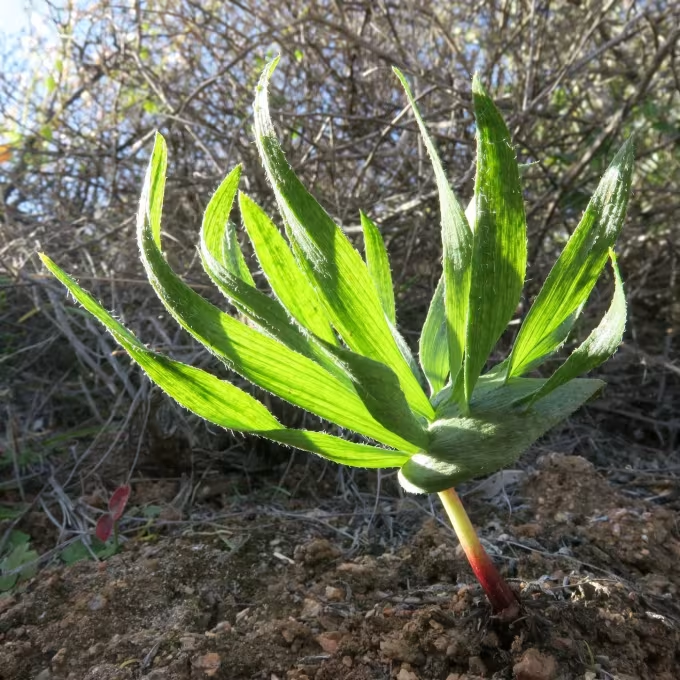
Eriospermum alcicorne is a distinctive bulbous succulent belonging to the Asparagaceae family. This species is highly sought after by succulent enthusiasts for its unique, antler-shaped foliage which provides a striking appearance compared to more common desert plants.
Native to the arid regions of Southern Africa, this plant has adapted to survive in harsh, moisture-limited environments. Understanding its natural growth cycle is the most important factor in keeping this specimen healthy throughout the year.
The substrate must be extremely well-draining to mimic the sandy, rocky soils of its origin. A mixture of grit, coarse sand, and a small amount of organic material is recommended to prevent water retention around the bulb, which is highly prone to rot.
Light requirements are significant; Eriospermum alcicorne needs bright, filtered light to maintain its compact growth habit. In low-light conditions, the leaves tend to become etiolated and lose their specific architectural shape, reducing the plant's ornamental value.
Watering should be approached with caution. During the active growing season, light watering is sufficient, but the soil should be allowed to dry out completely between applications. During the mandatory summer dormancy period, water should be withheld almost entirely.
Main diseases and pests
Root and bulb rot remain the primary causes of death for Eriospermum alcicorne in cultivation. This is almost always a result of overwatering or the use of a substrate that holds too much moisture for prolonged periods of time.
Mealybugs are the most common insect pests encountered on this plant. They tend to congregate in the protected areas around the leaf base, making early detection difficult without regular, careful inspection of the plant's anatomy.
Spider mites may infest the foliage during periods of low humidity, especially if the air circulation in the growing space is inadequate. These pests pierce the plant cells, leading to chlorosis and stunted development of the new leaf growth.
Preventative measures include maintaining good airflow and periodic cleaning of the leaves with a soft brush. If an infestation occurs, targeted use of horticultural soaps or systemic insecticides is necessary to eliminate the pest colonies.
Monitoring the soil pH and drainage quality is essential to prevent secondary infections. Keeping the plant in an adequately ventilated space prevents the development of fungal spores that thrive on moist, stagnant air near the soil surface.