
Queen of the Night cactus
Epiphyllum oxypetalum
Description
Growing requirements
Epiphyllum oxypetalum, commonly known as the Queen of the Night, is a species of cactus in the Cactaceae family. Native to southern Mexico and South America, it naturally thrives as an epiphyte, attaching itself to trees in humid tropical rainforest environments.
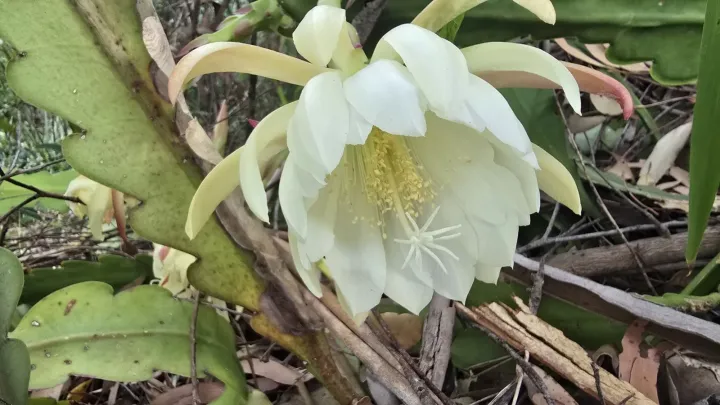
This species features long, flattened, leaf-like stems that act as the primary photosynthetic organs. It is a vigorous grower that requires sturdy support or a hanging basket to accommodate its arching stems, which can extend several feet in length over time.
For successful cultivation, provide bright, indirect sunlight. While the plant can tolerate some morning sun, intense midday exposure will scorch the stems. A stable indoor climate with temperatures between 18°C and 25°C is ideal for year-round growth.
The soil must be exceptionally well-draining, mimicking the forest floor debris. A mixture of orchid bark, peat moss, and perlite provides the necessary aeration and moisture retention that prevents root suffocation while maintaining the plant's health.
Consistent, moderate watering is required during the active growing season. Allow the top few inches of the soil to dry out completely before the next irrigation to avoid the risk of root rot. In winter, reduce watering significantly to induce a dormant period.
Main diseases and pests
The plant is susceptible to common houseplant pests including mealybugs and scale insects. These organisms often hide in the crevices of the stems, requiring frequent inspection and the application of horticultural oils or neem oil to manage infestations.
Root pathogens such as Phytophthora or Pythium are common threats if the growing medium remains waterlogged for extended periods. Maintaining good airflow around the plant and ensuring a robust drainage system are the most effective cultural controls for these diseases.
Harvesting
The primary utility of Epiphyllum oxypetalum is ornamental, specifically for its spectacular night-blooming flowers. The blossoms are large, white, and highly fragrant, opening for only one night, which makes them highly prized by hobbyist gardeners.
Propagation is primarily achieved through stem cuttings. To propagate, remove a healthy segment of the stem, allow the cut end to callous for several days in a shaded area, and then place it into a moist, porous potting mix until roots establish.