
Epiphyllum hybrid
Epiphyllum hybrids
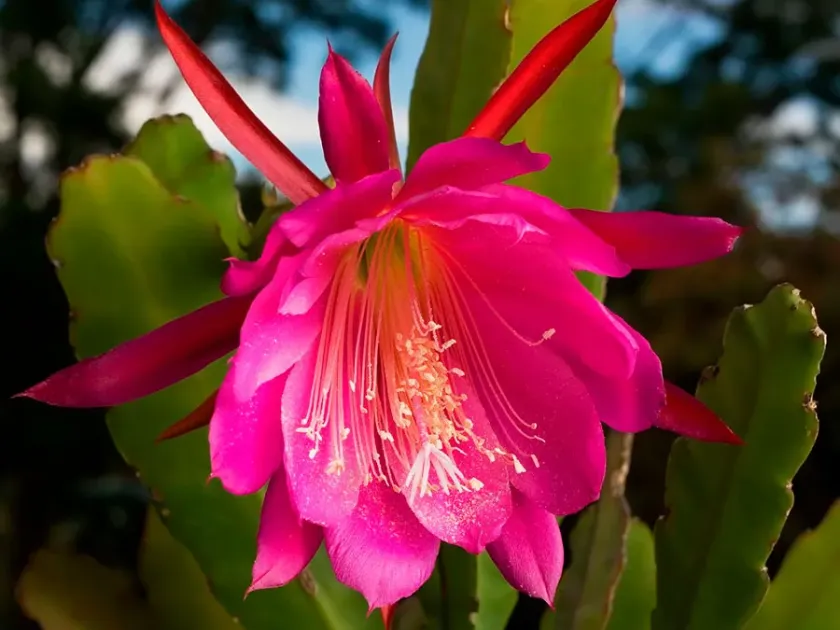
Description
Growing requirements
Epiphyllum hybrids are prized members of the Cactaceae family, known colloquially as orchid cacti. These plants are true epiphytes, originally native to the tropical rainforests of Central and South America. Unlike terrestrial cacti, they have adapted to grow in the crevices of tree bark, utilizing decomposing organic matter for nutrients.
Cultivation requires bright, indirect light to mirror their natural canopy-dwelling environment. Direct sun exposure must be strictly avoided, as it leads to severe scorching of the broad, succulent stems. A spot near a shaded window or a greenhouse with light-filtering mesh is ideal for healthy foliage development.
The substrate must be highly porous and slightly acidic. A mix composed of orchid bark, peat moss, perlite, and coarse sand provides the necessary drainage to prevent root asphyxiation. The pots should be relatively small, as these plants prefer a slightly constricted root space for optimal blooming.
Watering requirements are consistent with their tropical background; the substrate should be kept evenly moist but never waterlogged during the growing season. Once flowering finishes, the plant enters a period of rest, during which watering should be significantly reduced to encourage the dormant stage needed for next year's buds.
Temperature management is key to successful bloom cycles. They thrive in temperatures between 20°C and 25°C. During the winter, a cooling period with temperatures around 12°C to 15°C is essential to trigger the development of flower buds, making seasonal temperature shifts a critical agrotechnical practice.
Main diseases and pests
Mealybugs are the most persistent pest for Epiphyllum hybrids. They congregate in the indented edges of the stems and are often difficult to detect until an infestation is well-established. Routine cleaning and the use of horticultural oils are effective control measures.
Scale insects can also infest the stems, appearing as small brown bumps. These pests sap the vitality of the plant and should be manually removed or treated with systemic insecticides if the infestation is heavy and threatens the integrity of the plant structure.
Fungal rots, specifically Pythium or Phytophthora species, represent the greatest threat in humid indoor conditions. Overwatering combined with poor soil aeration provides the perfect environment for these pathogens to destroy the root system, often leading to rapid collapse of the plant.
To mitigate disease risks, ensure the plant is never left in standing water. Proper ventilation is just as crucial as substrate quality, as it helps evaporate excess moisture from the stems and the soil surface, thereby inhibiting fungal growth.
Monitoring for signs of stress, such as shriveling stems or loss of color, is vital. If root health is suspected to be declining, a repotting process into fresh, sterile mix is recommended, which also provides a chance to inspect for root pests.