
Woodland hawthorn
Crataegus laevigata (Poir.) DC.
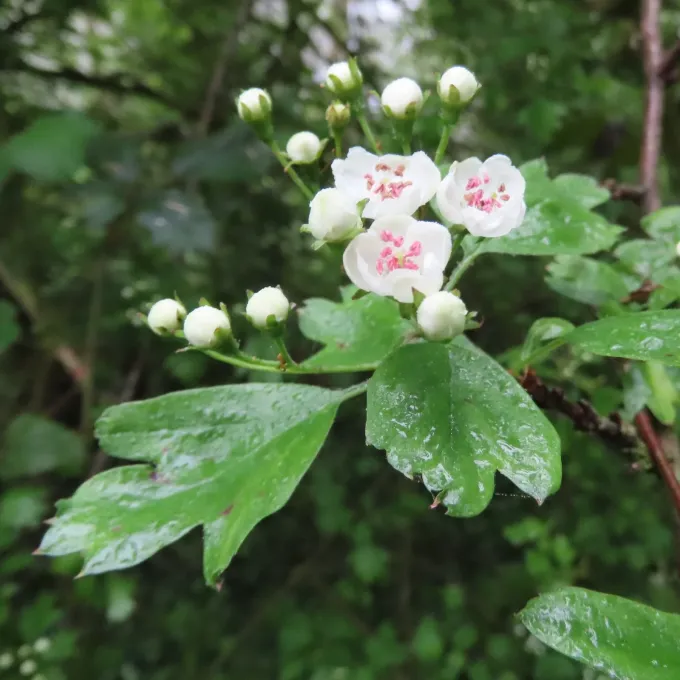
Description
Growing requirements
Woodland hawthorn (Crataegus laevigata) is a perennial shrub or small tree belonging to the Rosaceae family. Native to Europe, it is well-adapted to temperate forest fringes and hedgerows, demonstrating resilience in various soil conditions.
The species is highly valued for its winter hardiness and ability to thrive in urban environments. It exhibits a preference for sunny locations, though it maintains healthy growth patterns even in partial shade conditions, making it versatile for landscaping.
Cultivation requires deep, fertile, loamy soils with adequate drainage. While the plant is somewhat tolerant of different pH levels, it performs best in neutral to slightly alkaline environments, avoiding waterlogged sites that can lead to root issues.
Agricultural management involves ensuring sufficient moisture during the establishment phase. Once mature, the woodland hawthorn shows high drought tolerance, although supplementary watering during dry summer months significantly promotes robust berry development.
Routine pruning is essential for maintaining plant health and encouraging fruit production. By removing dead or crossing branches, growers improve airflow within the canopy, which is a critical factor in preventing the buildup of fungal infections.
Yield
The woodland hawthorn serves various economic purposes, primarily in the pharmaceutical and food sectors. Its berries are rich in flavonoids, vitamins, and antioxidants, forming the basis for many cardiac support medications and supplements.
In food production, the fruits are processed into jams, jellies, and herbal teas. The medicinal properties of both the berries and the flowers are recognized for their efficacy in promoting cardiovascular health and general well-being.
Beyond its culinary and medical applications, the plant is widely used as a natural barrier. Its dense growth and sharp thorns make it an excellent choice for protective hedges, which simultaneously serve as windbreaks and habitat for beneficial wildlife.
The wood of the tree is characterized by its density and fine grain, making it suitable for high-quality woodturning and tool handles. However, the primary focus of commercial cultivation remains the harvesting of pharmacological-grade plant material.
Under optimal agricultural practices, a mature shrub can yield between 5 and 15 kilograms of fruit annually. Fruit production typically commences 6 to 8 years after planting, with the plant remaining productive for several decades.
Main diseases and pests
The woodland hawthorn is susceptible to common Rosaceae diseases, with powdery mildew being a primary concern. This pathogen manifests as white fungal growth on leaves and shoots, often exacerbated by poor air circulation and high humidity.
Rust diseases are also prevalent, often appearing as distinct orange pustules on foliage. Proactive management using copper-based fungicides during early spring growth helps to mitigate these risks and maintain plant vitality.
Pests such as aphids and various larvae can damage foliage and developing fruit. Integrated pest management, focusing on early detection and the use of soft soaps or biological controls, is preferred over broad-spectrum pesticides to preserve local biodiversity.
Bacterial blight can occasionally affect branches, requiring immediate excision of the diseased tissue to prevent systemic infection. Keeping the tree well-nourished and pruned significantly boosts its natural defense mechanisms against such threats.
- Regular inspection of leaves for signs of discoloration or pests.
- Fall and spring sanitation pruning to remove potential pathogen hosts.
- Application of fungicides only when weather conditions favor disease spread.
Harvesting
Harvesting should occur when the berries reach full biological maturity and exhibit a deep, uniform red coloration. The optimal window is during dry weather in late summer or autumn, ensuring the fruits are free from excessive moisture.
Manual harvesting requires caution due to the sharp thorns present on branches. Growers typically use protective gloves and harvest in a way that minimizes physical damage to the wood, ensuring the plant returns to full production the following season.
Post-harvest, the berries must be processed quickly to maintain quality. They are often dried using industrial dehydrators at temperatures not exceeding 60 degrees Celsius to prevent the degradation of heat-sensitive chemical compounds.
Flowers should be collected during the early flowering phase, ideally when only a portion of the buds have opened. Quick drying in a shaded, well-ventilated space is critical to preserving the medicinal potency of the flower harvest.
Final storage of the dried product should take place in airtight, cool, and dark containers. This approach ensures that the harvested material remains stable for up to two years, maintaining its value for commercial pharmaceutical use.