
Wood's cycad
Encephalartos woodii
Description
Growing requirements
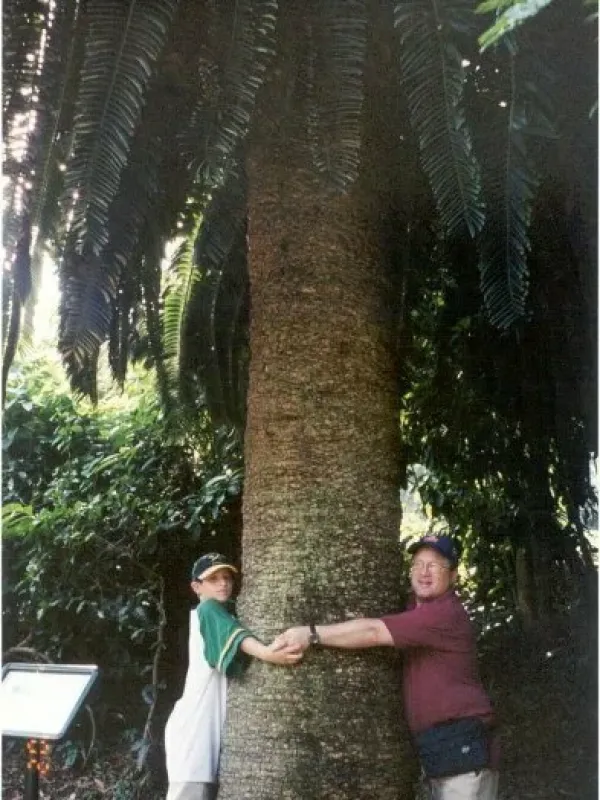
Encephalartos woodii, or Wood's cycad, belongs to the Zamiaceae family and is considered one of the rarest plants in existence. Originally discovered in the Ngoye Forest of South Africa, this species no longer exists in the wild and survives only as cloned male specimens in botanical gardens.
Botanically, it resembles a palm tree with a robust, thick stem and long, dark green pinnate leaves. The plant is dioecious, but because only male individuals are known, it is impossible to produce fertile seeds, making vegetative propagation the only way to multiply the population.
Cultivation requires strict adherence to subtropical conditions. The plants thrive in bright, indirect light, which mimics the environment of the coastal forest floor from which the original specimen was collected.
Soil requirements for this species are specific: it demands a well-draining, porous substrate. A mix consisting of volcanic rock, coarse sand, and organic potting material provides the necessary aeration to prevent root rot and ensure healthy growth.
Temperature management is crucial as the species cannot survive freezing conditions. An optimal temperature range during the active growing season is between 22°C and 28°C, while winter rest requires temperatures to stay comfortably above 15°C.
Main diseases and pests
The most common disease affecting Encephalartos woodii in controlled environments is fungal root rot. This usually stems from poor drainage or excessive watering, which causes the dense, fleshy root system to decay rapidly.
Scale insects are frequent pests that attach themselves to the underside of the leaflets. These sap-sucking insects drain the plant's energy and, if left untreated, can lead to severe yellowing and eventual leaf drop.
Spider mites are another major threat, especially when ambient humidity levels drop too low. They proliferate in dry, warm air and form fine webs, which damage the foliage and create entry points for secondary bacterial infections.
Nutrient deficiencies often manifest as chlorosis or stunted leaf development. Because this is a slow-growing plant, fertilizers must be applied cautiously, focusing on slow-release formulas that prevent salt buildup in the container.
Viral and bacterial pathogens can enter through physical wounds caused by improper pruning or division of offshoots. Strict hygiene using sterilized tools is mandatory when performing any vegetative maintenance on these extremely valuable specimens.